Michelangelo's David in Florence: Tickets, History & Tips (2026)
Everything you need to know about Michelangelo's David: location, history, visiting tips, and why this 17-foot marble masterpiece is the world's most famous sculpture.
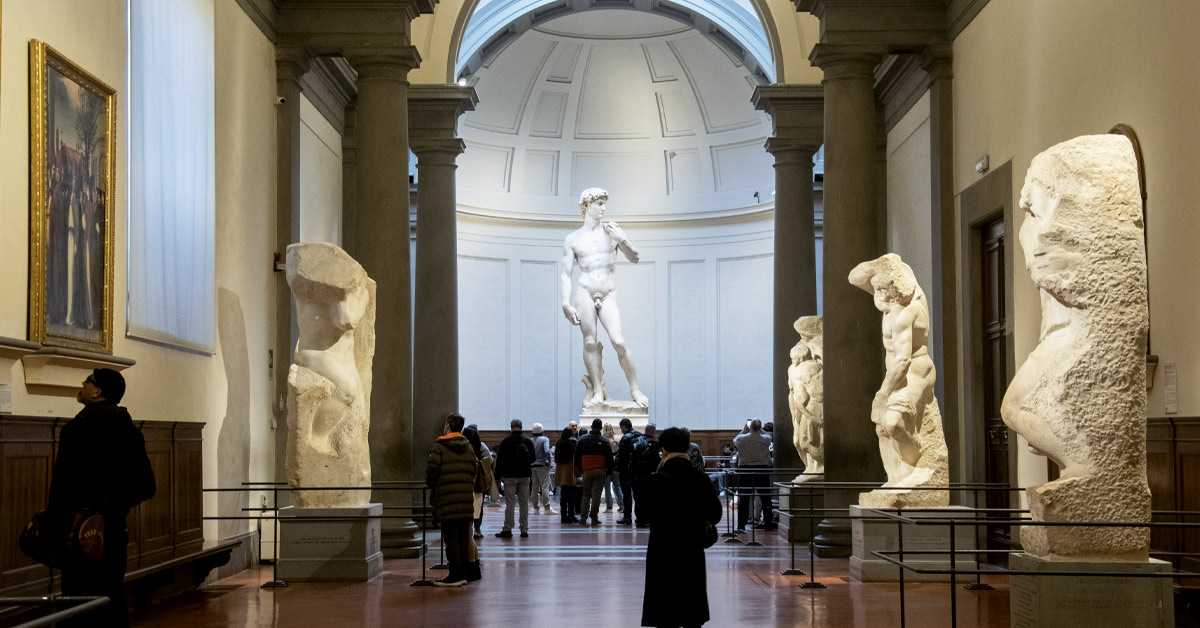
Michelangelo's David isn't just Florence's most famous artwork—it's arguably the world's most iconic sculpture. Standing 17 feet tall, this Renaissance masterpiece draws over 1.5 million visitors annually to Florence's Accademia Gallery.
If you're visiting Florence, seeing David is likely top of your list. This comprehensive guide covers everything: where David is located, how to visit, what makes it extraordinary, and essential planning tips.
Quick Facts About David
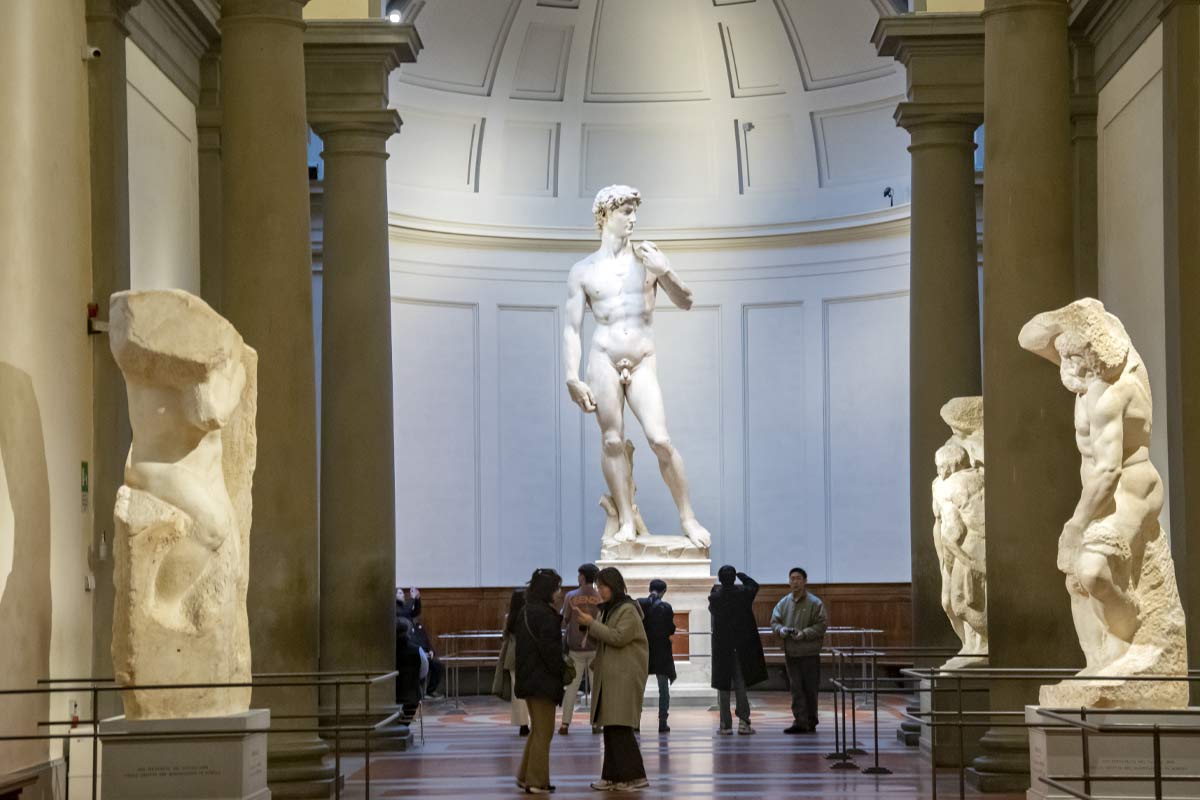
Michelangelo's David: The world's most famous sculpture standing 17 feet tall at Accademia Gallery
Basic Information:
- Artist: Michelangelo Buonarroti
- Date: 1501-1504 (carved over 3 years)
- Material: Carrara marble (single block)
- Height: 5.17 meters (17 feet)
- Weight: Approximately 6 tons
- Location: Galleria dell'Accademia, Florence
- Original Location: Piazza della Signoria (1504-1873)
Why It's Famous:
- Perfect Renaissance proportions
- Unprecedented anatomical accuracy
- Michelangelo's masterpiece (age 26-29)
- Symbol of Florentine independence
- Most reproduced sculpture in art history
Where Is David Statue Located in Florence?
Current Location: Accademia Gallery
Address:
Via Ricasoli, 58-60, 50122 Firenze FI, Italy
How to Find It:
- 5-minute walk from Florence Duomo
- Northeast of the Duomo, toward Piazza San Marco
- Follow signs for "Accademia" or "David"
Inside the Museum:
David stands in the Tribune, a specially designed domed rotunda at the end of the main corridor. You'll walk through the gallery's "Gallery of Prisoners" (four unfinished Michelangelo sculptures) before reaching David in its dedicated space with natural overhead lighting.
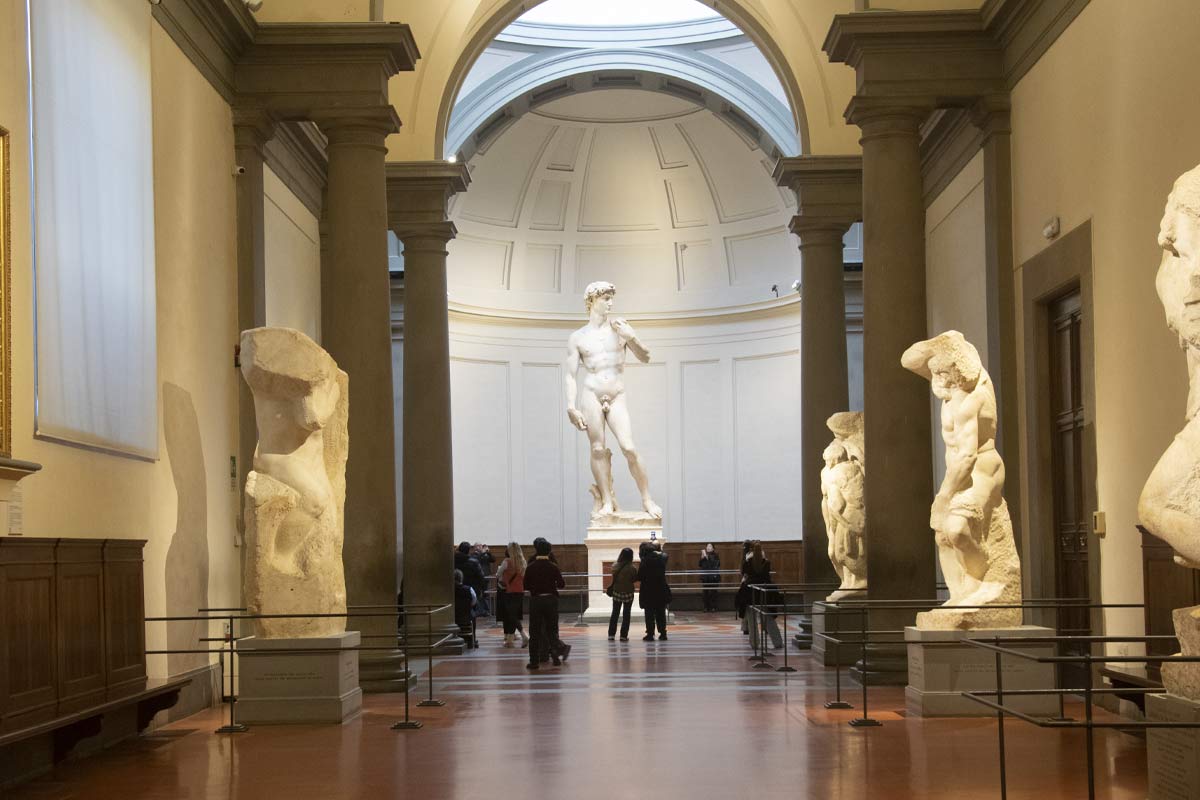
David displayed in the specially designed Tribune Hall with dramatic overhead lighting
Why David Moved Indoors
Original Location (1504-1873):
David originally stood in front of Palazzo Vecchio in Piazza della Signoria as a political symbol representing Florence's defiance against tyranny.
The Move:
In 1873, after nearly 370 years outdoors, David was moved indoors to protect it from weather erosion and damage. The Tribune was specially constructed with a skylight to replicate natural outdoor lighting.
Today:
A marble replica (placed in 1910) now stands in David's original location in Piazza della Signoria. Another replica, in bronze, is at Piazzale Michelangelo overlooking Florence.
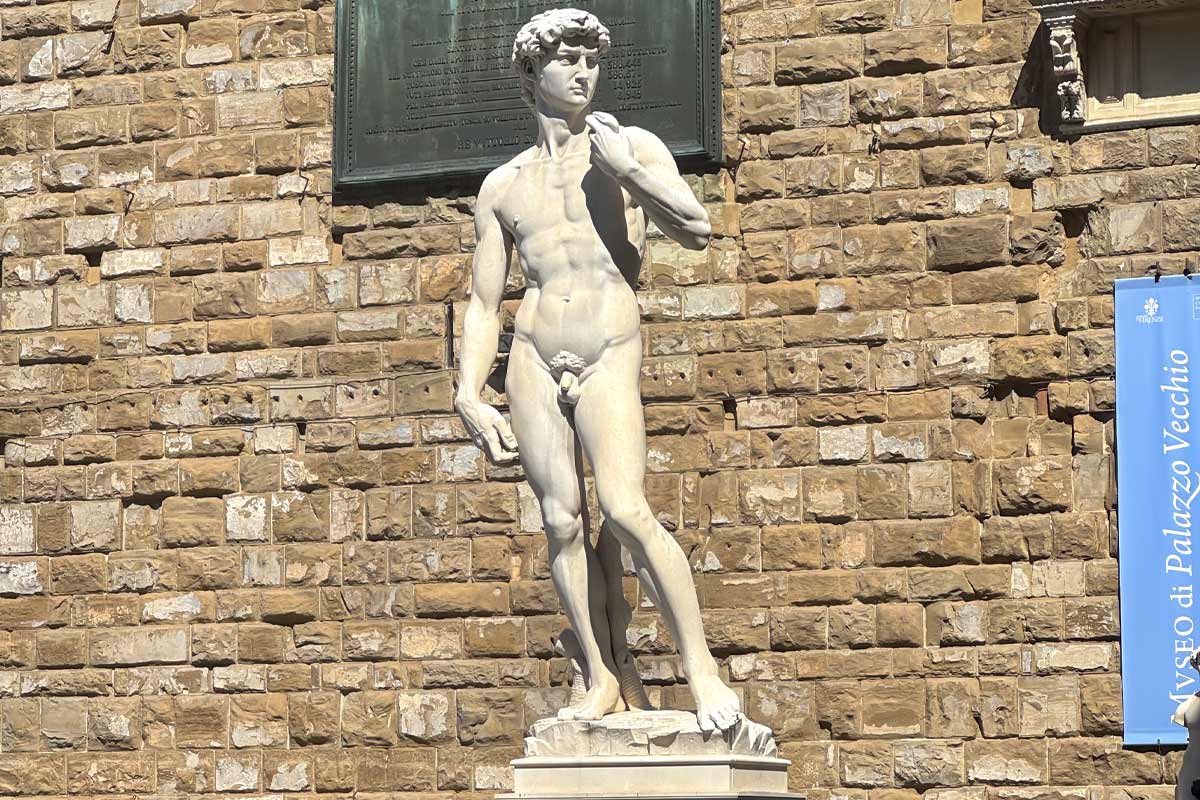
Marble replica of David (1910) stands at the original location in Piazza della Signoria
The Story of David: History and Creation
Commission and Challenge
The Abandoned Marble Block:
In 1501, Florence's Opera del Duomo commissioned 26-year-old Michelangelo to sculpt a figure from a massive marble block that had been abandoned for 40 years. Two previous sculptors (Agostino di Duccio and Antonio Rossellino) had attempted and given up on the flawed, partially carved block.
The Challenge:
- The marble block was already partially carved
- It had visible flaws and limited thickness
- Previous artists deemed it "ruined"
- Standard practice would require a new block
Michelangelo's Solution:
Rather than reject the flawed block, Michelangelo saw potential. He worked within its constraints, creating a narrower, more vertical composition than typical Renaissance sculptures.
The Biblical Story
David depicts the biblical hero before his battle with Goliath:
Traditional Depictions:
Most Renaissance artists (Donatello, Verrocchio) showed David after victory, standing triumphantly over Goliath's severed head.
Michelangelo's Innovation:
Michelangelo captures David before battle—tense, focused, preparing for combat. This psychological intensity was revolutionary.
Details of the Moment:
- David's muscles are taut, ready for action
- His gaze is fixed on the distant enemy
- His right hand holds the stone
- His left hand holds the sling over his shoulder
- His expression shows concentration and determination
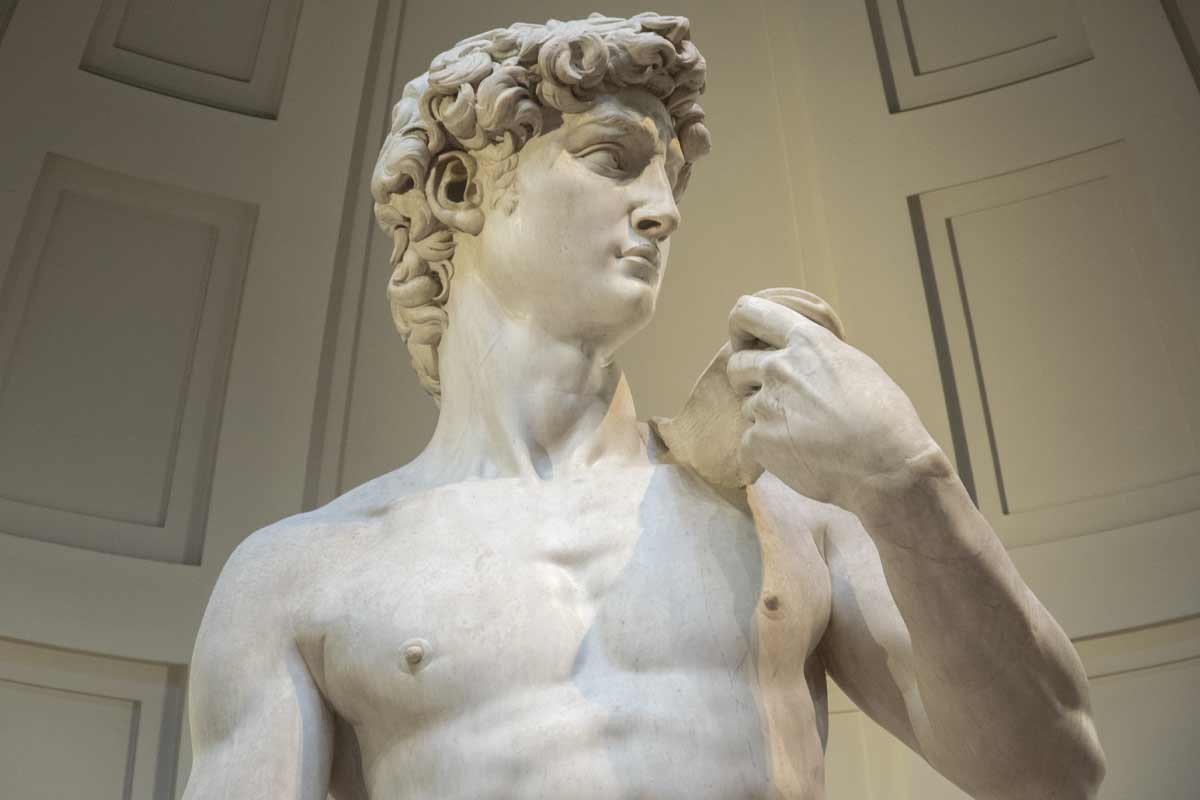
David's intense gaze captures the moment before battle with remarkable psychological depth
Three Years of Sculpting
Timeline:
- 1501: Commission awarded to Michelangelo (age 26)
- 1501-1504: Three years of carving
- September 1504: David unveiled in Piazza della Signoria
Working Conditions:
Michelangelo worked largely alone, often through the night by candlelight, keeping his process secret. He built a wooden scaffold and shed around the marble to work in private.
Completion:
When unveiled, David was immediately recognized as a masterpiece. A commission of Florence's leading artists (including Leonardo da Vinci and Botticelli) decided its placement.

Timeline of David's creation and journey from commission to its current home
What Makes David Extraordinary?
Anatomical Perfection
Renaissance Humanism:
David embodies Renaissance ideals: perfect human form representing human potential and intellect.
Anatomical Accuracy:
- Every muscle, tendon, and vein is accurately rendered
- Contrapposto stance (weight on one leg) creates natural posture
- Hands and feet are slightly oversized (intentional, for visual impact from below)
- Even small details like fingernails are perfect
Medical Accuracy:
Modern medical students study David's anatomy. Doctors have identified accurate rendering of hand veins that only appear when gripping (David grips the sling and stone).
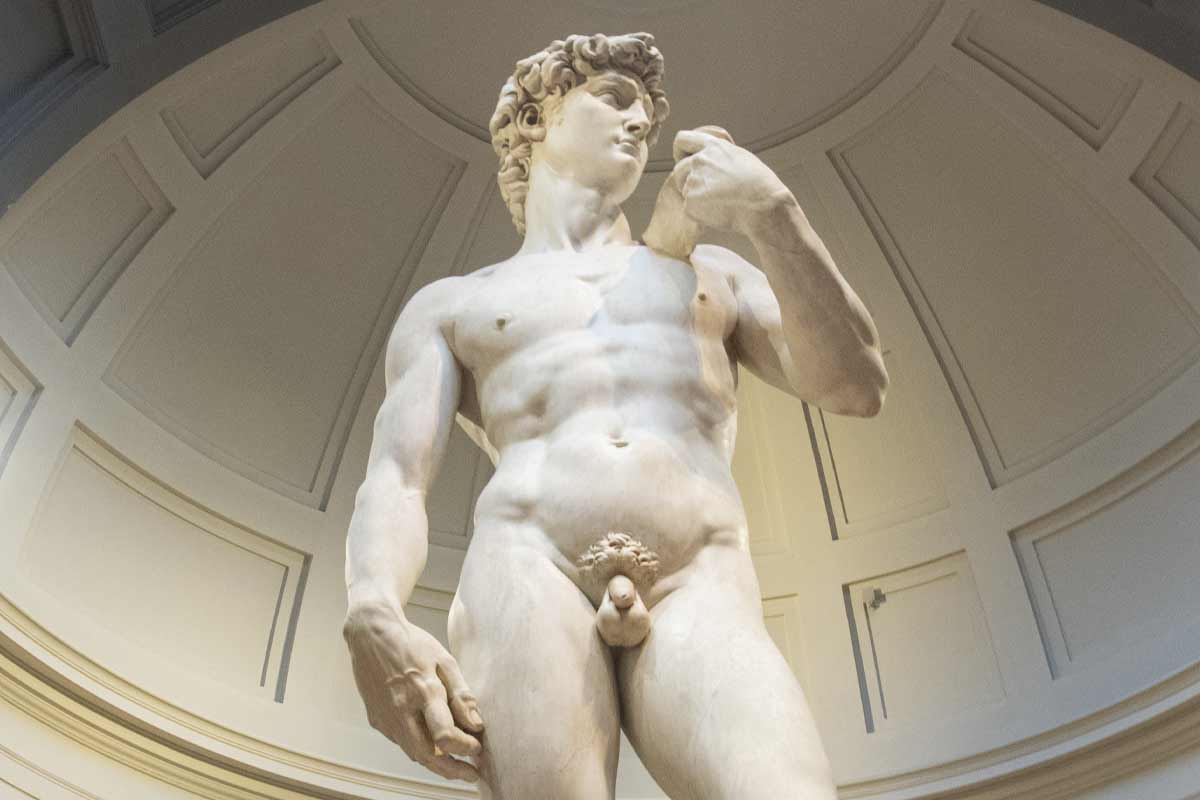
David's deliberately oversized hands emphasize his strength and hold the stone that defeats Goliath
Technical Mastery
Carving from a Single Block:
The entire 17-foot statue was carved from one block of Carrara marble—no separate pieces attached. This requires extraordinary planning and skill.
Marble's Translucency:
Michelangelo carved the marble thin enough in places that natural light penetrates slightly, giving David's skin a lifelike glow.
The Veins:
Visible veins across David's body aren't painted or added—they're carved into the marble at different depths to create shadows that appear as veins.
Artistic Innovations
Psychological Intensity:
Unlike serene classical sculptures, David shows focused intensity—furrowed brow, alert gaze, tense muscles. This psychological realism was unprecedented.
Movement Frozen in Time:
David appears both still and about to move. The contrapposto stance and tension suggest imminent action.
Scale and Presence:
At 17 feet, David dominates space. Michelangelo designed it for high placement (atop Florence Cathedral), so proportions are slightly exaggerated for viewing from below.
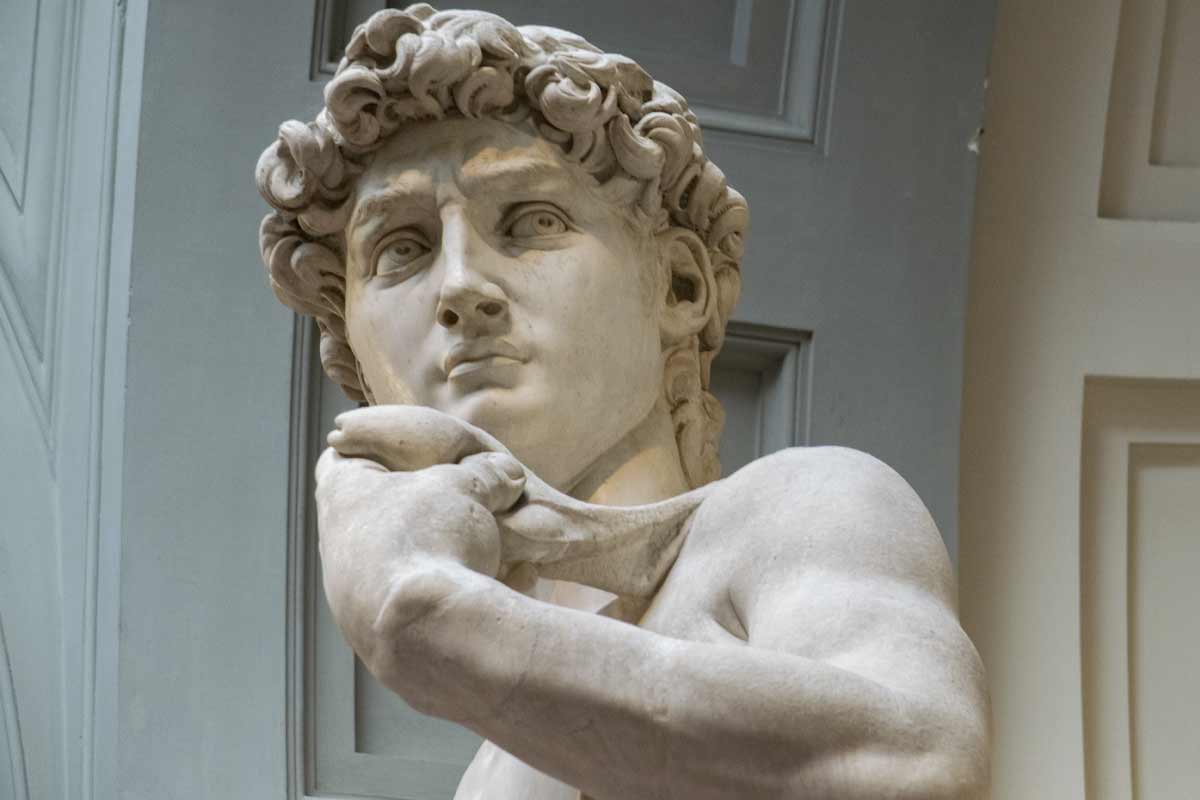
The rear view reveals Michelangelo's mastery of anatomical detail and muscle structure

Size comparison showing David's impressive 17-foot height
Symbolism for Florence
Political Meaning:
David symbolized Florence's republican government standing against tyranny (represented by Goliath). The statue was placed at Palazzo Vecchio, the seat of government, as a warning to Florence's enemies.
Florentine Pride:
Florence commissioned David during a period of political turmoil. The statue became a symbol of the city's courage, independence, and artistic achievement.
Visiting David: Practical Information
Tickets and Reservations
Ticket Prices (2026):
- Adults: €20 (standard entry, since 1 February 2026)
- EU Citizens (18-25): €2
- Under 18 (all nationalities): Free
- First Sunday of the month: free for everyone (very crowded)
Reservation Fee:
€4 booking fee for a reserved entry time (highly recommended), so €24 in total
Where to Book:
- Official: galleriaaccademiafirenze.it (official Accademia Gallery website)
- Tour companies: Small group tours with skip-the-line access
Combined Tickets (new from 15 March 2026):
- Accademia + Bargello, valid 48 hours: €26
- All six museums of the Accademia–Bargello group, valid 72 hours: €38
Advance Booking Essential:
David is Florence's most visited single artwork. During peak season (April-October), tickets sell out weeks in advance. Book as early as possible.
Opening Hours
Standard Hours:
- Tuesday-Sunday: 8:15am-6:50pm (last entry 6:20pm)
- Closed: Mondays, 1 January and 25 December
Extended Summer Hours:
During peak season (July-August), the Accademia sometimes extends hours. Check official website.
Best Time to Visit:
- Earliest slot (8:15am): Smallest crowds, best light
- Late afternoon (after 5pm): Fewer visitors
- Avoid: 10am-2pm (peak crowds)
Wait Times
With Reservation:
Usually a short security line (often 5-15 minutes)
Without Reservation (Not Recommended):
- Low season: often 30-60 minutes
- Peak season: can exceed 1-2 hours
- Summer peak and holidays: often longer
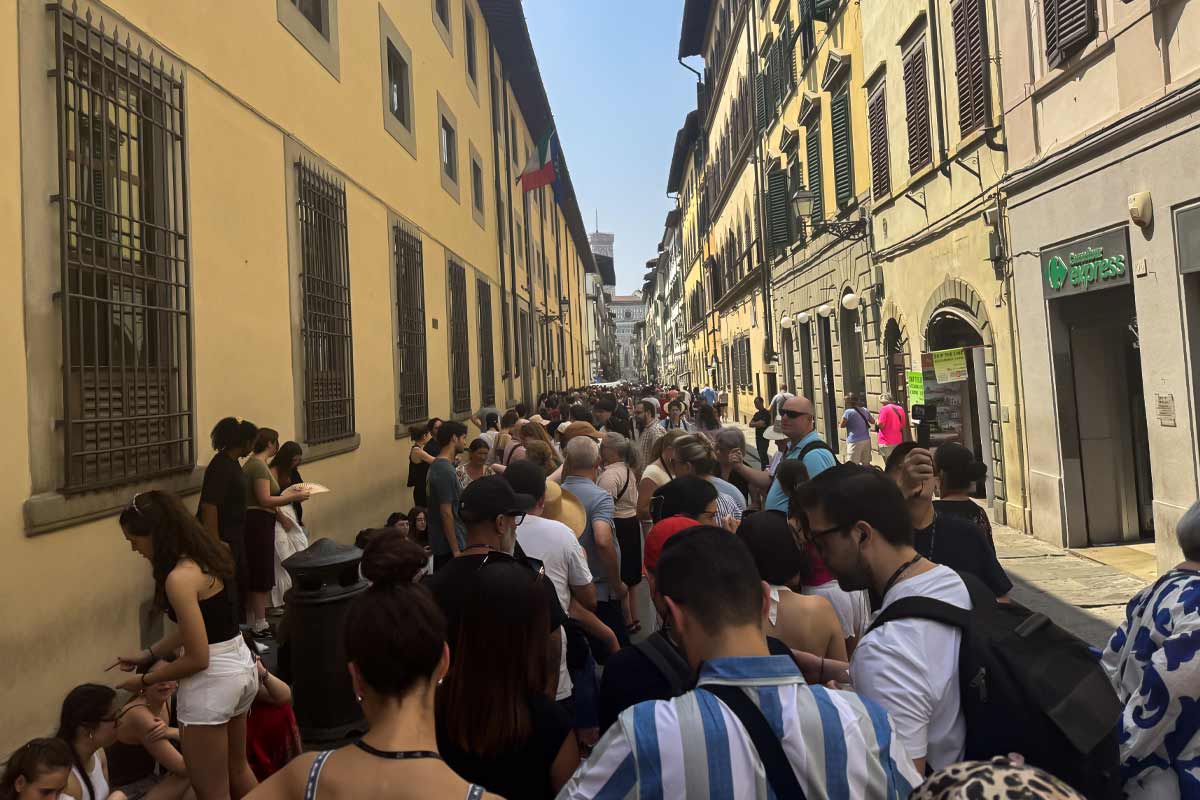
Long queues are common at Accademia Gallery - book skip-the-line tickets in advance
Reality:
Don't visit without a reservation unless you enjoy long lines. The €4 booking fee is worth it.
How Long to Spend at Accademia
Minimum: 45 minutes
- 15 minutes: David
- 30 minutes: Gallery of Prisoners, other works
Recommended: 1-1.5 hours
- 20-30 minutes: David (viewing from all angles, reading information)
- 30-45 minutes: Michelangelo's Prisoners
- 15-30 minutes: Other collections (Botticelli, medieval art, musical instruments)
Maximum: 2 hours (for serious art enthusiasts)
Photography Rules
Allowed:
- Photos for personal use (no flash)
- Smartphone photos
Not Allowed:
- Flash photography (damages artwork)
- Professional camera equipment (tripods, large cameras)
- Selfie sticks
- Video recording
Respectful Photography:
David is crowded. Don't block others for extended photo sessions. Take your photos quickly and let others enjoy the space.
Planning Your David Visit
Skip-the-Line Options
Option 1: Reserved Ticket
- Cost: €24 (€20 + €4 reservation)
- Skip ticket line, but wait in security line
- Book on official site
Option 2: Small Group Tour
- Cost: varies by operator (see the tour page for current prices)
- Skip all lines
- Expert guide provides context and history
- Includes other Accademia highlights
- Best value for most visitors
Option 3: Private Tour
- Cost: varies by operator (see the tour page for current prices)
- Private guide
- Flexible timing
- Best for families or groups
What Else to See at Accademia Gallery
While David is the star, don't miss:
Michelangelo's Prisoners (Slaves):
Four unfinished sculptures (Atlas, Bearded Slave, Awakening Slave, Young Slave) showing Michelangelo's technique of "releasing" figures from marble.
Pietà di Palestrina:
Disputed Michelangelo sculpture showing Christ's body after crucifixion.
Florentine Paintings:
13th-16th century Florentine works, including Botticelli, Ghirlandaio, and Perugino.
Musical Instrument Collection:
Historic instruments from the Medici collection, including Stradivarius violins.
Medieval Art:
Gold-background religious paintings showing evolution toward Renaissance realism.
Accessibility
Wheelchair Access:
The Accademia is fully wheelchair accessible via elevator.
Audio Guides:
Available for rent at the gallery for a small extra fee. Provides detailed David commentary.
Seating:
Benches available in the Tribune (David's room) for extended viewing.
Seeing Other David Replicas in Florence
Piazza della Signoria Replica
Location: In front of Palazzo Vecchio, David's original spot
Why Visit:
- Free to view
- See David in historical context
- Understand original placement
- Great for photos without crowds
Quality: Marble replica (1910), identical proportions
Piazzale Michelangelo Replica
Location: Panoramic terrace overlooking Florence
Why Visit:
- Best views of Florence
- David silhouetted against cityscape
- Romantic sunset spot
- Free
Quality: Bronze replica
Which David to See?
Original (Accademia Gallery):
Essential. The marble's translucency, scale, and presence are impossible to appreciate in replicas.
Replicas:
Nice additions, but not substitutes. Visit replicas for context and photos, but prioritize the original.
Common Questions About David
Why are David's hands so large?
Intentional Design:
Michelangelo slightly enlarged David's hands and head because the statue was originally intended to be placed high atop Florence Cathedral. Seen from below, the proportions would appear correct.
Artistic Choice:
The large hands also emphasize David's strength and the stone he holds—key elements of the narrative.
Why is David uncircumcised?
Artistic Convention:
Renaissance artists depicted biblical figures with idealized classical (Greek/Roman) anatomy. Classical nudes were uncircumcised, so Renaissance artists followed this convention despite biblical accounts of David being Jewish.
Humanism Over Religion:
Renaissance humanism prioritized classical ideals of beauty over strict biblical accuracy.
Why does David look in one direction?
David's gaze is fixed on the approaching enemy (Goliath). This directional focus creates tension and narrative—David isn't posing, he's preparing for battle.
Can you see David without a ticket?
Usually, no. David is inside the Accademia Gallery, which requires a ticket—except on the first Sunday of the month, when entry is free for everyone (very crowded, no reservations). Under-18s are always free.
You can see replicas for free (Piazza della Signoria, Piazzale Michelangelo), but not the original.
Is there a dress code?
No strict dress code at the Accademia (unlike churches). However:
- Dress respectfully
- Avoid overly revealing clothing
- Comfortable shoes recommended (standing, walking)
How crowded is the David room?
Very crowded during peak hours. The Tribune (David's room) can accommodate about 50-60 people comfortably, but during peak season, it's often packed with 100+ visitors at once.
Best Crowd Strategy:
- Visit at opening (8:15am)
- Late afternoon (after 5pm)
- Off-season (November-March)
Can I touch David?
Absolutely not. Security guards monitor closely. Touching damages the marble (skin oils cause erosion).
Why was David sculpted naked?
Classical Tradition:
Greek and Roman sculptures depicted heroes naked to celebrate ideal human form. Renaissance artists revived this tradition.
Heroism and Vulnerability:
David's nudity emphasizes both his youth/vulnerability and his heroic courage—he faces Goliath with only faith and skill, not armor.
What's the white dust on David's surface?
You're seeing accumulated marble dust from the original carving and environmental deposits. Accademia Gallery carefully maintains David but cannot clean aggressively without risking damage. Gentle cleaning is done periodically.
Combining David with Other Florence Attractions
Perfect Day Itinerary
8:15am - Accademia Gallery (David)
- 1-1.5 hours
- See David when crowds are smallest
10am - Walk to Duomo
- 5 minutes
- See Florence Cathedral exterior
10:30am - Climb Duomo Cupola OR Campanile
- Book ahead (separate ticket)
- 1 hour
11:30am - Coffee Break
- Traditional Florentine café
12pm - Uffizi Gallery
- Book skip-the-line
- 2-3 hours
- See Botticelli, Leonardo, Raphael
3pm - Lunch
- Authentic Tuscan trattoria
4:30pm - Walk to Ponte Vecchio
- 10 minutes
- Stroll across historic bridge
5pm - Piazzale Michelangelo
- Sunset view
- See David replica with city backdrop
David + Uffizi Combination
Many visitors want to see Florence's two art powerhouses: David (Accademia) and Uffizi Gallery.
Recommended Timing:
- Morning: Accademia (8:15-9:45am)
- Late Morning: Uffizi (11am-1pm or 2pm)
- Space them out to avoid art fatigue
Combined Tours:
Several tour companies offer small group tours covering both Accademia and Uffizi in one morning with skip-the-line access. This is the most efficient option for time-limited visitors.
David Tour Options
Option 1: Small Group Tour (Recommended)
What's Included:
- Skip-the-line access
- Expert guide (1 hour)
- Accademia highlights
- David history and analysis
- Group size: up to 10 people
Cost: see the tour page for current prices
Best For:
- First-time visitors
- Anyone wanting context and stories
- Time-limited travelers
- Those who want to skip all lines
Book: Florence With Locals David & Accademia VIP small group tour
Option 2: Accademia + Uffizi Combined Tour
What's Included:
- Both museums in one visit (morning or afternoon departure)
- Skip-the-line both locations
- Expert guide (3.5 hours)
- See David + Uffizi masterpieces
Cost: see the tour page for current prices
Book: Uffizi & Accademia Semi-Private Tour with Art Historian
Best For:
- Travelers with limited time
- Art enthusiasts
- One-day Florence visitors
Option 3: Self-Guided with Reserved Ticket
What's Included:
- Reserved entry time
- Audio guide (optional, small extra fee)
- Explore at your own pace
Cost: €24 (€20 ticket + €4 booking fee), plus audio guide if wanted
Best For:
- Budget travelers
- Those who prefer independent exploring
- Visitors with art history background
Essential David Visiting Tips
- Book Weeks Ahead
Tickets sell out, especially April-October. Book the moment your travel dates are confirmed.
- Arrive 15 Minutes Early
Security lines can be long even with reservations.
- Visit First Thing (8:15am)
Smallest crowds, best lighting, most intimate experience.
- Walk Around David
View from all angles. The back view shows incredible anatomical detail.

Best viewing angles to appreciate David's details and proportions
- Look at the Hands
David's right hand holds the stone, his left hand holds the sling over his shoulder. Notice the veins.
- Check the Face
David's expression shows focused intensity—furrowed brow, alert gaze.
- Don't Rush
Spend at least 15-20 minutes with David. This is a once-in-a-lifetime experience for many visitors.
- See the Prisoners
Don't miss Michelangelo's unfinished Prisoners on the way to David. They show his sculpting process.
- Download the Accademia App
Free app provides detailed information about David and other works.
- Combine Smartly
If doing multiple museums, space them out. Art fatigue is real.
Why David Matters
Five centuries after its creation, David remains art's most famous sculpture. Why?
Universal Symbol:
David represents the triumph of skill, courage, and intelligence over brute force—a timeless human story.
Technical Perfection:
Michelangelo's mastery of anatomy, proportion, and marble carving has never been surpassed.
Emotional Power:
Unlike cold classical sculptures, David feels alive—tense, focused, human.
Historical Significance:
David marks the peak of Renaissance art, when artists achieved perfect synthesis of classical ideals and human realism.
Cultural Impact:
David has been reproduced, referenced, and parodied more than any sculpture in history. It's genuinely iconic.
Conclusion: An Unforgettable Encounter
Seeing David in person is transformative. Photos and replicas cannot convey its scale, presence, or the luminous quality of Carrara marble.
Standing before David, you understand why Michelangelo is considered the greatest sculptor in history. The technical skill is obvious—but what truly astonishes is the psychological intensity captured in stone.
Essential Planning Summary:
- Book tickets weeks ahead (sell out quickly)
- Visit at 8:15am opening (smallest crowds)
- Reserve 1-1.5 hours for Accademia
- Consider a guided tour (context enriches the experience)
- Walk around David (view from all angles)
- See the Prisoners (Michelangelo's unfinished works)
David isn't just Florence's most famous artwork—it's humanity's portrait of itself at its finest. Five hundred years later, it still takes your breath away.
Ready to see David? Book our Accademia small group tour with guaranteed skip-the-line access and expert local guides.
Have questions about visiting David? Our local Florence team provides personalized advice for planning your visit.
Book a guided tour in Florence
We are a licensed Florence tour operator running small-group museum tours with local guides. Browse our tours.
Florence With Locals S.r.l. — Via Taddea 35/R, 50123 Firenze (FI), Italy · P.IVA / VAT IT07564730484 · Registro Imprese di Firenze 07564730484 · REA FI-712305 · SCIA – Agenzia di viaggi e tour operator (ATECO 79.11) — SUAP Comune di Firenze, prot. 07564730484-23072026-0853.
contact@florencewithlocals.com · +39 327 249 1282 · PEC withlocals@pec.it