Ponte Vecchio Florence: History, Best Views & Tips (2026)
Complete guide to Florence's iconic Ponte Vecchio: history, jewelry shops, Vasari Corridor, best viewpoints, and why this medieval bridge survived World War II when all others were destroyed.
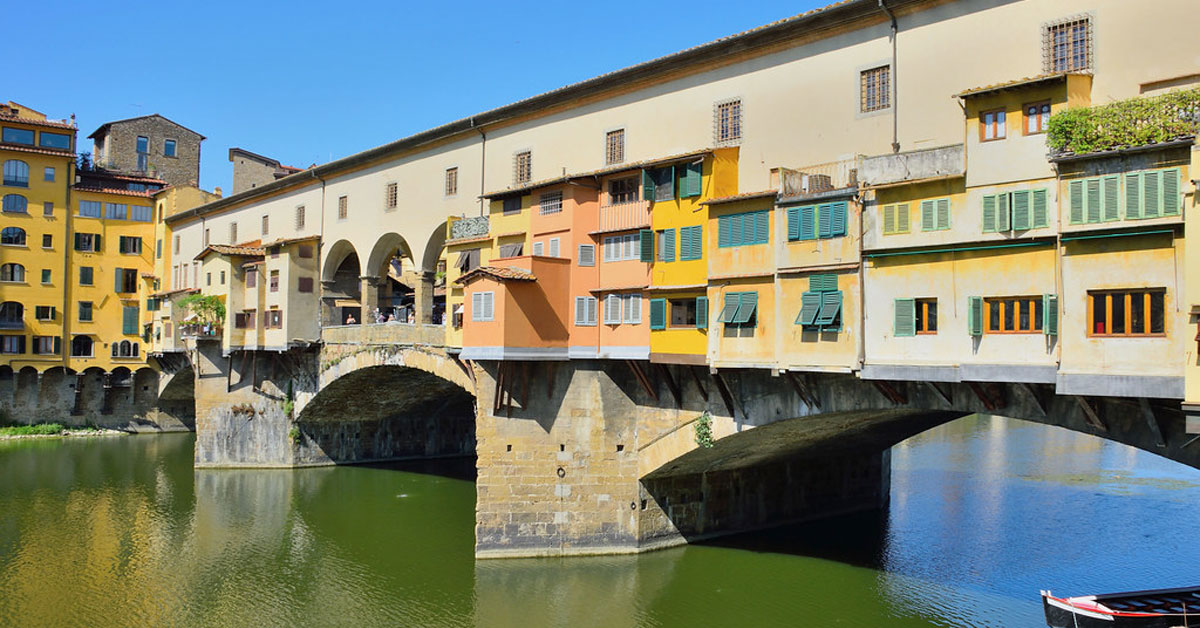
Ponte Vecchio ("Old Bridge") is Florence's most iconic landmark and one of Italy's most photographed sites. This medieval stone bridge, lined with jewelry shops and spanning the Arno River, has witnessed over 700 years of Florentine history.
Unlike most European bridges, Ponte Vecchio has shops built along it—a medieval practice that survives here alone. This comprehensive guide covers the bridge's fascinating history, what to see, where to photograph it, and why it was the only Florence bridge spared in World War II.
Quick Facts About Ponte Vecchio
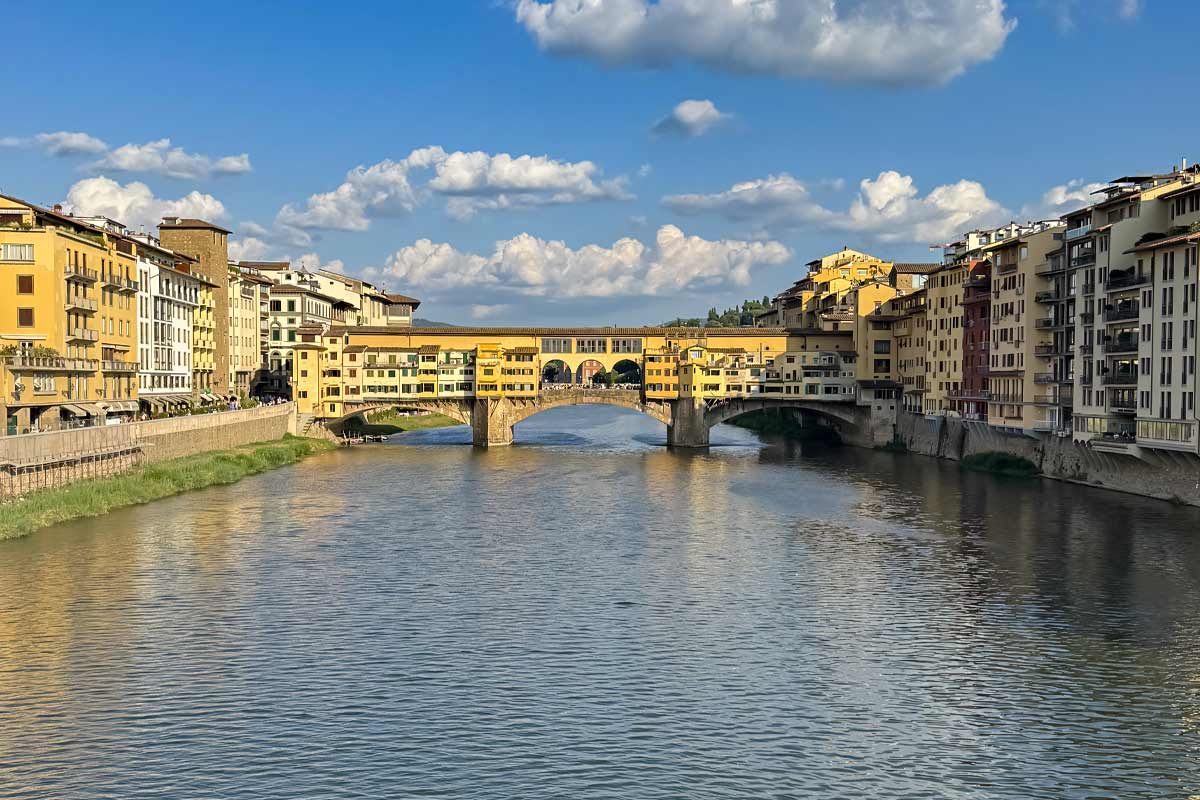
Ponte Vecchio spanning the Arno River: Florence's most iconic medieval bridge with shops
Basic Information:
- Built: 1345 (current structure)
- Length: 84 meters (276 feet)
- Width: 32 meters at widest point
- Material: Stone arches
- Spans: Arno River at its narrowest point
- Shops: 43 jewelry stores and art dealers
- Access: Free, always open (public bridge)
Why It's Famous:
- Medieval bridge with shops (rare survival)
- Only Florence bridge not destroyed in WWII
- Vasari Corridor runs above (private Medici passage, reopened to visitors in December 2024)
- Center of Florence's goldsmith tradition
- Iconic Florence symbol
History of Ponte Vecchio
Ancient Origins
Roman Era:
A bridge has existed at this location since Roman times (at the Arno's narrowest point). The Roman bridge was destroyed by floods multiple times.
Medieval Predecessors:
Several medieval bridges stood here before the current structure, all destroyed by Arno floods.
1345 Construction:
The current Ponte Vecchio was built in 1345, designed by Taddeo Gaddi (or possibly Neri di Fioravanti—historians debate). This was after the catastrophic 1333 flood destroyed the previous bridge.
Engineering Innovation:
The 1345 bridge featured wider, flatter arches than previous designs—more stable against flooding. This design has survived nearly 700 years, including major floods.
The Shops: From Butchers to Jewelers
Medieval Marketplace (1345-1565):
Initially, Ponte Vecchio housed butchers, tanners, and fishmongers—tradesmen who appreciated the convenient disposal system (tossing waste into the Arno below). The bridge reeked.
1565: The Medici Change Everything
When Duke Cosimo I de' Medici commissioned Giorgio Vasari to build the Vasari Corridor (private elevated passageway from Palazzo Vecchio to Palazzo Pitti), the corridor passed above Ponte Vecchio's shops.
Problem: The Medici couldn't tolerate walking above stinking butcher shops.
Solution (1593): Duke Ferdinando I expelled the butchers, tanners, and fishmongers, replacing them with jewelers and goldsmiths—cleaner, more elegant trades befitting the Medici's passage.
Today:
Ponte Vecchio remains Florence's jewelry center. The 43 shops sell everything from affordable silver to million-euro diamonds. The goldsmith tradition has continued uninterrupted for over 400 years.
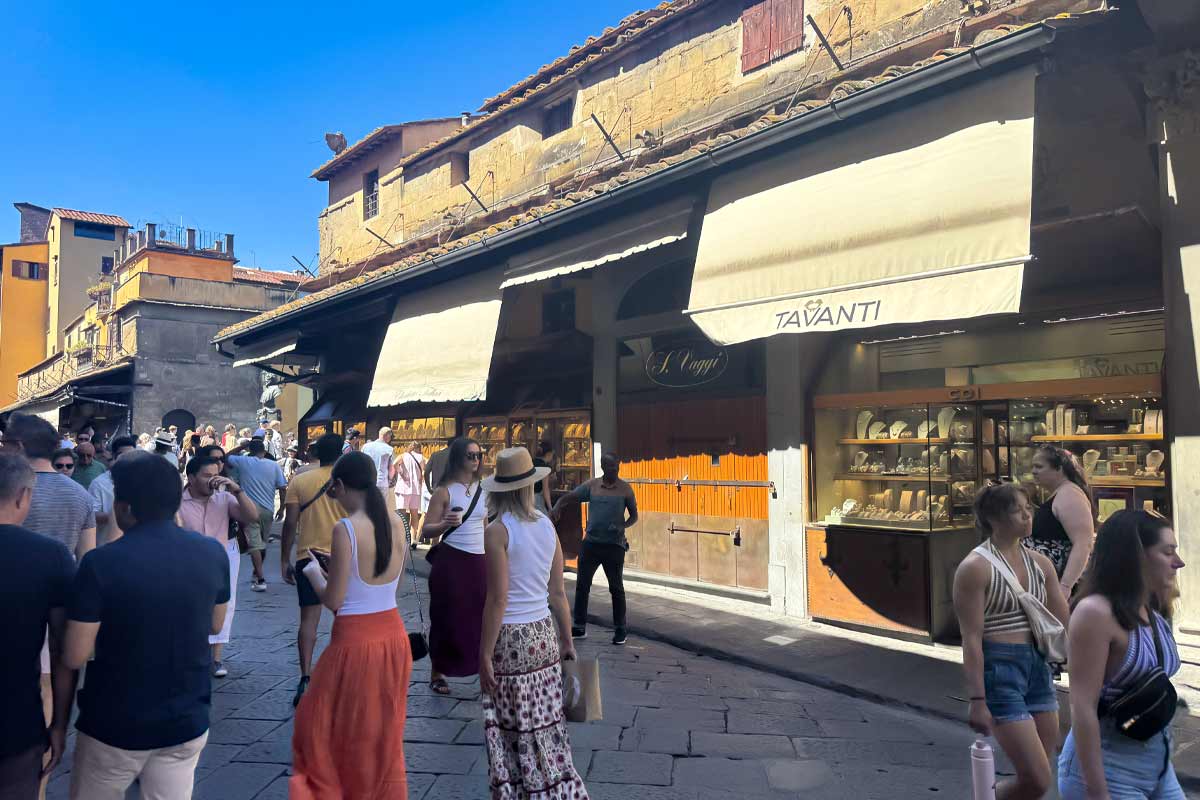
Historic gold and jewelry shops line both sides of Ponte Vecchio

Map of jewelry shops and their specialties along Ponte Vecchio
World War II: The Bridge Hitler Spared
August 1944:
German forces occupied Florence as Allied troops advanced. Hitler personally ordered all Arno bridges destroyed to slow Allied advancement.
The Destruction:
On August 4, 1944, Germans dynamited all Florence bridges: Ponte Santa Trinita, Ponte alla Carraia, Ponte alle Grazie, and Ponte San Niccolò. All collapsed into the Arno.
Ponte Vecchio Spared:
Except Ponte Vecchio. The German consul in Florence, Gerhard Wolf (later made an honorary citizen of Florence), is credited with helping persuade German commanders to spare Ponte Vecchio due to its historical and artistic significance.
Compromise:
Instead of destroying Ponte Vecchio, Germans demolished medieval buildings at both bridge entrances, creating rubble barriers that achieved the same military goal (blocking Allied tanks) while preserving the bridge itself.

Complete history timeline of Ponte Vecchio from ancient origins to modern day
Why It Mattered:
This decision saved Europe's most famous medieval bridge. All other destroyed Florence bridges were rebuilt postwar (using original stones recovered from the river), but only Ponte Vecchio is authentically medieval.
Notable Floods
Despite surviving WWII, Ponte Vecchio has faced its greatest enemy repeatedly: the Arno.
1333 Flood:
Destroyed the previous bridge, leading to construction of the current Ponte Vecchio.
1966 Flood:
The worst Arno flood in modern history. Water reached 5 meters above normal, submerging Ponte Vecchio's shops. Jewelers lost millions in inventory. The bridge survived structurally but required extensive restoration.
Today:
Modern flood control systems (including the Santa Rosa dam upstream) reduce flood risk, but the Arno remains unpredictable.
What to See on Ponte Vecchio
The Jewelry Shops
43 Shops:
All shops on Ponte Vecchio sell jewelry, gold, watches, or fine art—continuation of the 400-year goldsmith tradition.
What's Sold:
- Gold jewelry (Italy is famous for high-quality gold)
- Diamonds and precious stones
- Italian designer jewelry
- Watches (luxury brands)
- Silver jewelry (more affordable range)
- Antique jewelry
- Custom designs
Shopping Tips:
- Quality: Ponte Vecchio jewelers have excellent reputations, but you're paying for prime location
- Prices: Higher than elsewhere in Florence (premium location)
- Negotiation: Possible for major purchases (politely)
- Authenticity: Legitimate businesses (Florence regulates strictly)
- Best for: Serious jewelry purchases or window-shopping
Just Looking:
Most visitors window-shop rather than buy. The glittering displays are beautiful, and jewelers are accustomed to browsers.
Bust of Benvenuto Cellini
Center of the Bridge:
At Ponte Vecchio's center (midpoint), a bronze bust of Benvenuto Cellini sits above the arches.
Who Was Cellini?
Renaissance goldsmith, sculptor, and artist (1500-1571). He worked on Ponte Vecchio and created some of Italy's finest Renaissance jewelry and sculpture.
Why Here:
The bust honors Cellini and all Florentine goldsmiths. It's also Ponte Vecchio's only open viewing area (no shops), offering the best on-bridge photo opportunity.
Viewing Tip:
This central opening is crowded (everyone stops for photos). Visit early morning or evening for less congestion.
The Vasari Corridor
What It Is:
An elevated, enclosed passageway running above Ponte Vecchio's shops, connecting Palazzo Vecchio (government palace) to Palazzo Pitti (Medici residence) via the Uffizi Gallery.
History:
Built in 1565 by architect Giorgio Vasari in just 5 months, commissioned by Duke Cosimo I de' Medici. The corridor allowed the Medici to travel privately between their residence and government offices without mixing with common citizens (or risking assassination).
Route:
The corridor runs from Palazzo Vecchio, through the Uffizi Gallery, across Ponte Vecchio above the shops, through buildings in Oltrarno, and ends at Palazzo Pitti. Total length: about 1 kilometer.
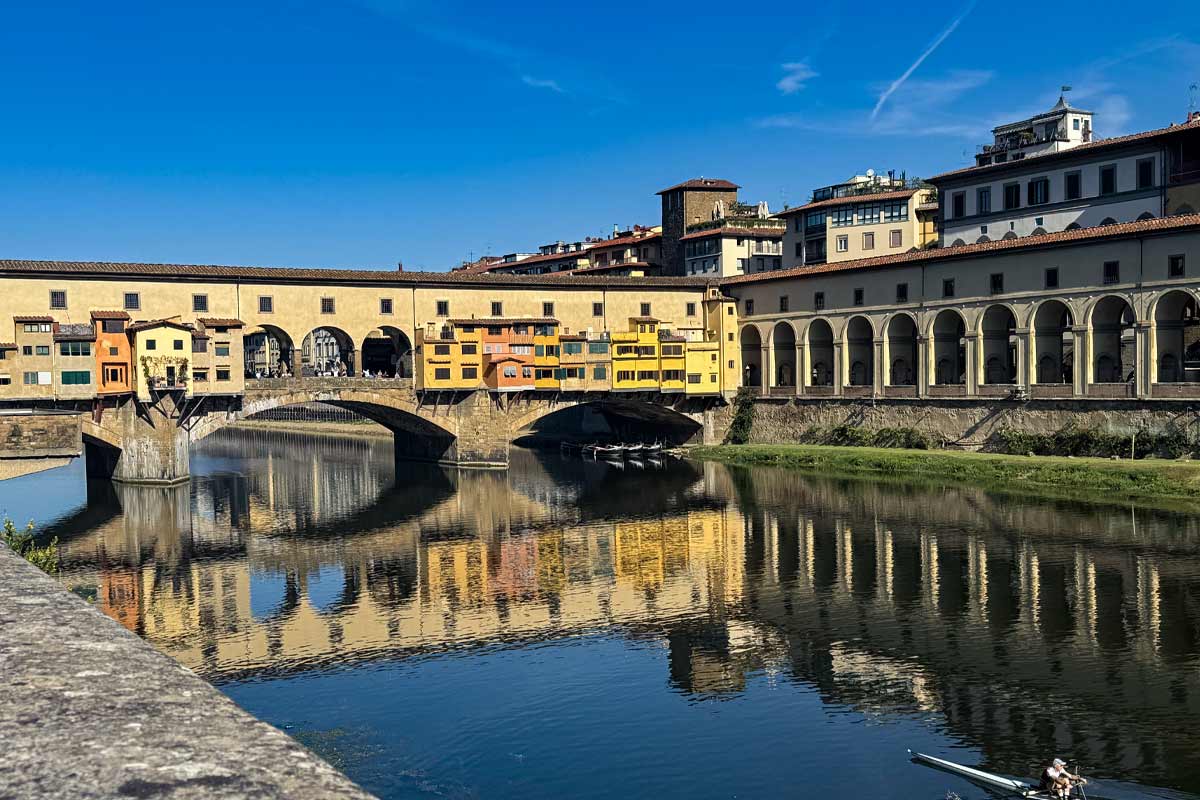
The Vasari Corridor runs above Ponte Vecchio shops, connecting Medici palaces
Can You Visit?
Yes. The corridor reopened in December 2024 after a long restoration (it had been closed since 2016). It can only be visited with the Uffizi + Vasari Corridor combined ticket: €43 bought on the day or €47 in advance. Entry is by timed slot with limited capacity, so book well ahead.
What You'll See:
- Walk above Ponte Vecchio's shops
- Windows offering unique bridge views
- The Medici's private box overlooking the interior of Santa Felicita church
- Views over the Oltrarno rooftops as the corridor heads toward Palazzo Pitti
Booking Tip:
Slots sell out in high season. Prefer a guide? Our Uffizi tour with the Vasari Corridor combines both; see the tour page for details.
Padlocks "Love Locks"
Former Tradition:
For years, couples attached padlocks to Ponte Vecchio's railings and threw the key into the Arno (symbolizing eternal love).
Problem:
Thousands of padlocks damaged the historic bridge structure. The weight stressed the railings, and removal damaged stonework.
2006 Ban:
Florence banned love locks on Ponte Vecchio. Authorities regularly remove locks, and fines can apply.
Alternative:
Some couples now leave locks on Ponte alle Grazie (nearby bridge) where it's tolerated, though officially discouraged.
Best Ponte Vecchio Viewpoints
Ponte Vecchio is beautiful to cross, but the best views are from nearby vantage points:
1. Ponte Santa Trinita (Best Overall View)
Location: Next bridge west of Ponte Vecchio (2-minute walk)
Why It's Best:
- Perfect straight-on view of Ponte Vecchio
- Arno reflections in foreground
- Unobstructed sightlines
- Far enough to capture entire bridge
Best Time:
- Sunset: Golden hour light illuminates the bridge (west-facing)
- Blue hour: Just after sunset, when Florence lights come on
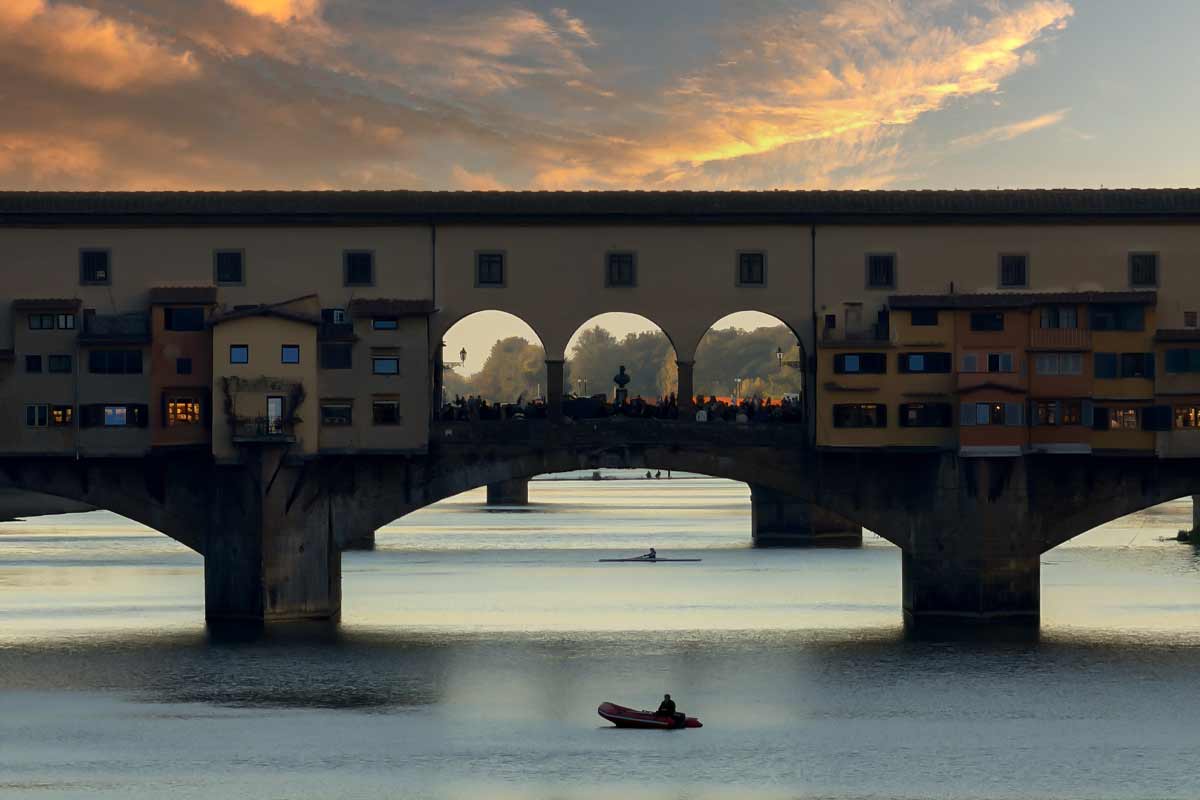
Ponte Vecchio at sunset: the golden hour creates magical lighting perfect for photography
Photography Tip:
Stand on the upstream (east-facing) side, near the Oltrarno end, for the classic postcard view.
2. Lungarno Torrigiani (Riverside Walk)
Location: South bank of the Arno, east of Ponte Vecchio
Why It's Good:
- Close-up side view
- Arno reflections
- Less crowded than Ponte Santa Trinita
- Beautiful at sunset
Walking Route:
Walk along the Arno's south bank from Ponte alle Grazie toward Ponte Vecchio. Multiple excellent photo spots along the way.
3. Piazzale Michelangelo
Location: Hilltop terrace overlooking Florence (15-minute walk uphill or short bus ride)
Why It's Worth It:
- Panoramic Florence view with Ponte Vecchio visible
- See how the bridge fits into Florence's urban landscape
- Best overall Florence view
- Sunset favorite
Photography Tip:
Bring a zoom lens to capture Ponte Vecchio detail from this distance.
4. Uffizi Gallery (Arno-Side Windows)
Location: Windows of the Uffizi's short Arno-facing corridor on the top floor
Requirements:
- Must have a Uffizi Gallery ticket (€25 on the day, €29 in advance; €16 for entry from 4 pm)
- Tickets are nominative: bring ID matching the name on the ticket
- The view costs nothing extra once inside the museum
Why Special:
- Elevated view over Arno toward Ponte Vecchio
- Unique angle most tourists never see
- Combine art viewing with photography
5. From Ponte Vecchio Itself (Cellini Bust)
Location: Center of Ponte Vecchio
Why Visit:
- On-bridge perspective
- Close-up of jewelry shops
- Arno views upstream/downstream
- Feel the bridge's atmosphere
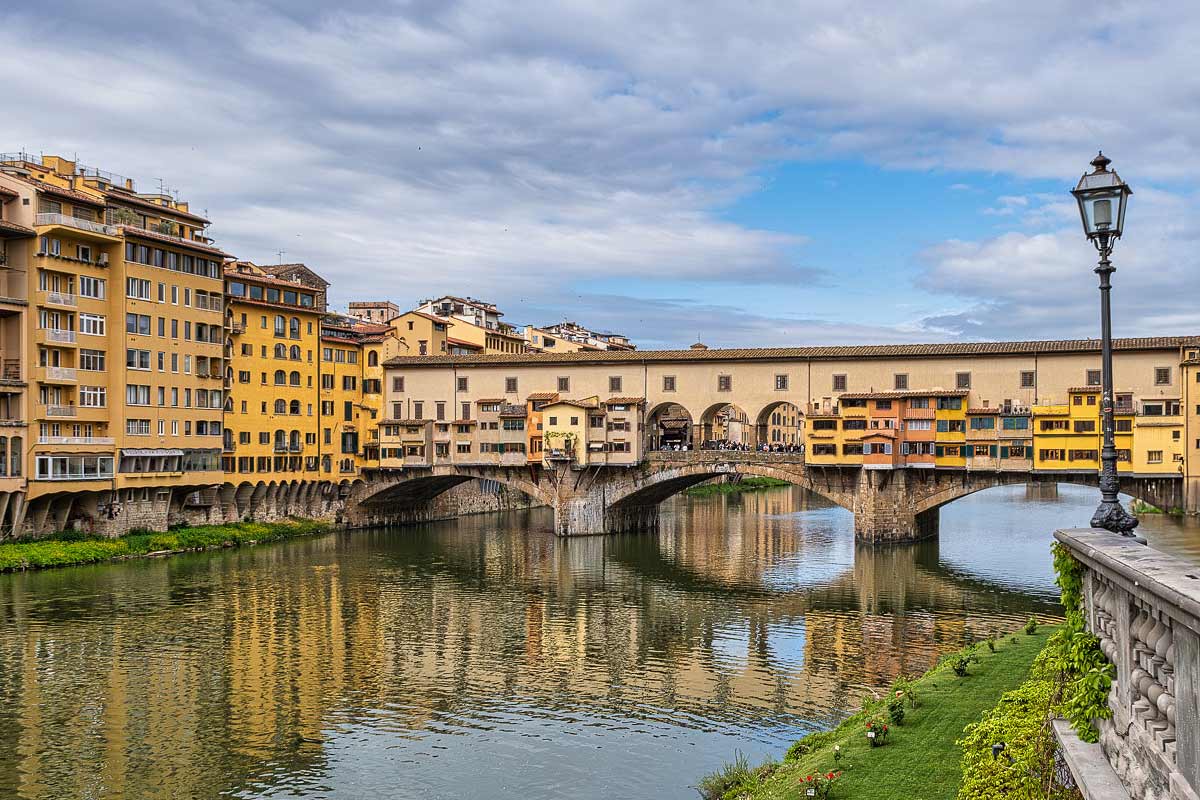
View of the Arno River from the center of Ponte Vecchio looking toward Florence's bridges
Challenge:
Crowded, especially midday. Difficult to get clear photos.
Best Times to Visit Ponte Vecchio
Time of Day
Sunrise (6-7am):
- Empty bridge (magical experience)
- Soft morning light
- Best for photography
- Shops closed (windows still beautiful)
Morning (8-10am):
- Moderate crowds
- Shops opening
- Good light for photos
Midday-Afternoon (11am-5pm):
- Very crowded (avoid if you dislike crowds)
- Harsh light for photos
- Shops open
Sunset (Golden Hour):
- Beautiful light
- Crowded but magical
- Best time for photos from Ponte Santa Trinita
Evening (After 8pm):
- Crowds thin out
- Romantic atmosphere
- Bridge lights illuminated
- Shops closed (fewer sparkles, quieter)
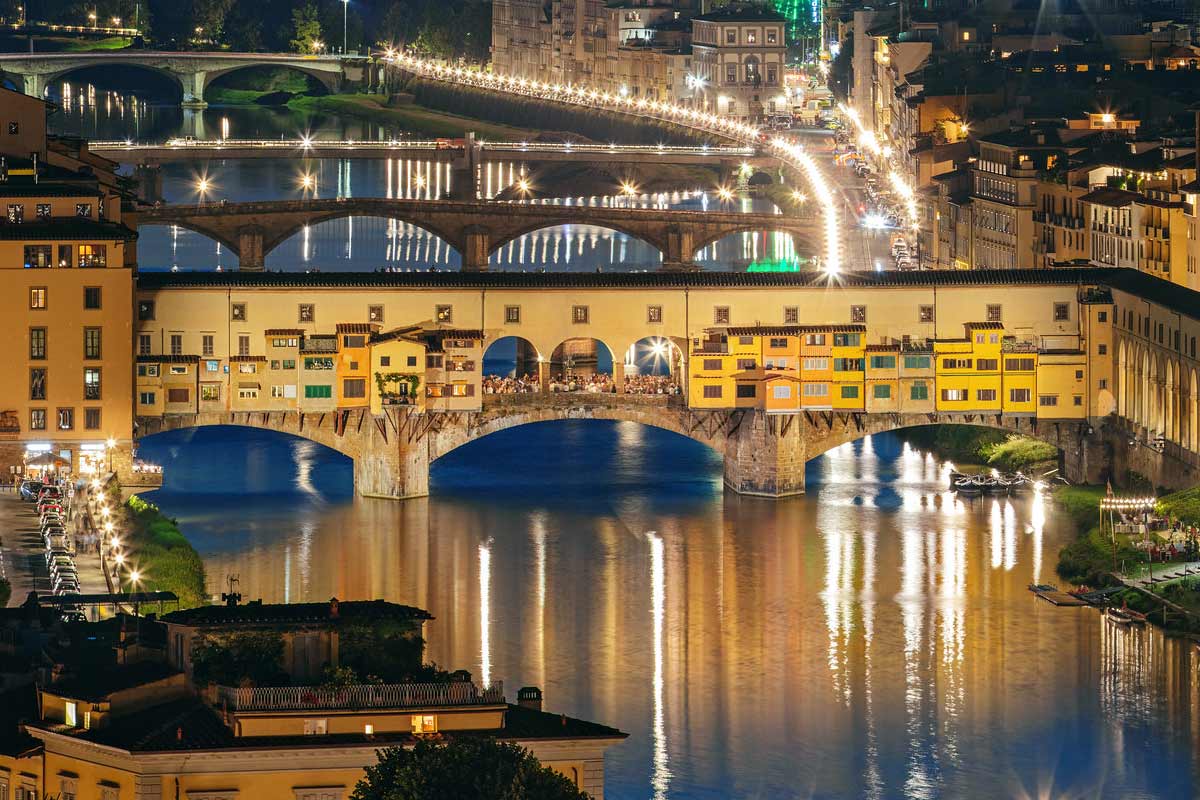
Ponte Vecchio beautifully illuminated at night creates romantic reflections in the Arno River
Season
Best Seasons:
- April-May: Spring, pleasant weather, moderate crowds
- September-October: Autumn, warm weather, fewer tourists than summer
Summer (June-August):
- Very crowded
- Hot (shadeless bridge)
- Long daylight hours (late sunset)
Winter (November-February):
- Fewer tourists
- Cold but manageable
- Shorter daylight
- Occasional beautiful foggy mornings
Visiting Tips
Getting There
Location:
Center of Florence, connecting the historic center to the Oltrarno district.
Walking:
- From Duomo: 8 minutes
- From Uffizi Gallery: 3 minutes
- From Piazza della Signoria: 5 minutes
- From Santa Croce: 10 minutes
No Car/Bus Needed:
Ponte Vecchio is in the pedestrian zone. You'll walk there as part of any Florence itinerary.
Access
Always Open:
Ponte Vecchio is a public bridge, open 24/7. No tickets, no restrictions (except no bikes allowed).
Free:
No entry fee.
Accessibility:
The bridge is flat and wheelchair accessible. However, it's always crowded during daytime, making navigation challenging.
Avoiding Crowds
Strategies:
- Visit at sunrise (before 7am) for an empty bridge
- Visit after 9pm (fewer tourists, locals walking home)
- Avoid 11am-5pm (peak crowds)
- View from Ponte Santa Trinita instead (better views, fewer people)
Safety
Pickpockets:
Ponte Vecchio is crowded, attracting pickpockets. Watch your belongings, especially phones and wallets.
Crowds:
The bridge can be shoulder-to-shoulder during peak times. Keep belongings secure and be patient.
Shopping on Ponte Vecchio
If You're Buying:
- Compare prices at multiple shops
- Ask for certificates of authenticity (diamonds, gold)
- Negotiate politely for major purchases
- Check current gold/diamond prices beforehand
If You're Not Buying:
- Window-shopping is expected and welcomed
- No pressure from shopkeepers
- Enjoy the sparkling displays
Photography Tips
- Best Photo Spot: Ponte Santa Trinita (next bridge over)
- Best Time: Sunset (golden hour)
- Avoid Flash: Inside shops (if allowed photos)
- Be Respectful: Don't block foot traffic for photos
- Use a Zoom Lens: For detailed shots from Piazzale Michelangelo
Ponte Vecchio FAQs
Is Ponte Vecchio free to visit?
Yes, completely free. It's a public bridge.
What are the opening hours?
24/7. It's a bridge, always open.
How long should I spend there?
10-15 minutes to walk across and browse shops.
30-45 minutes including photos from Ponte Santa Trinita viewpoint.
Can I visit the Vasari Corridor?
Yes. It reopened in December 2024 and can only be visited with the Uffizi + Vasari Corridor combined ticket (€43 on the day, €47 in advance), in timed slots with limited capacity. Book ahead, especially in high season.
Are the jewelry shops expensive?
Yes, prices are higher than elsewhere in Florence (prime location premium). Quality is generally excellent, but you're paying for the Ponte Vecchio address.
Is there a dress code?
No. Casual clothing is fine.
Can I eat on the bridge?
Not recommended. It's very crowded, there's no seating, and it's disrespectful to litter on a historic monument.
Why is it called "Ponte Vecchio"?
"Ponte Vecchio" means "Old Bridge" in Italian. It earned this name because it's the oldest bridge in Florence (built 1345).
What happened to the butcher shops?
In 1593, Duke Ferdinando I expelled butchers and tanners, replacing them with jewelers to eliminate the stench beneath the Vasari Corridor (the Medici's private passageway above the shops).
Why wasn't Ponte Vecchio destroyed in WWII?
German commanders, reportedly persuaded by the German consul Gerhard Wolf, spared Ponte Vecchio due to its historical significance and blocked its approaches with rubble instead. Popular accounts say Hitler himself ordered it spared, though historians debate this.
Combining Ponte Vecchio with Other Attractions
Half-Day Itinerary: Historic Florence
9am - Piazza della Signoria
- Start at Florence's main square
- See Palazzo Vecchio, Loggia dei Lanzi sculptures
- 30 minutes
9:30am - Uffizi Gallery
- Book a timed-entry ticket in advance (closed Mondays; tickets are nominative, bring ID) or join our small-group Uffizi tour
- See Botticelli, Leonardo, Michelangelo
- 2 hours
11:30am - Walk to Ponte Vecchio
- 3 minutes
- Cross bridge, browse shops
- 20 minutes
12pm - Ponte Santa Trinita
- Walk to next bridge
- Best Ponte Vecchio photo spot
- 15 minutes
12:15pm - Lunch in Oltrarno
- Traditional trattoria south of Arno
- 1 hour
1:15pm - Oltrarno Artisan Walk
- Explore workshops, leather shops, antiques
- 1 hour
Sunset Walk
Timings suit spring and early autumn; shift them later in summer and earlier in winter to match sunset.
6:30pm - Piazzale Michelangelo
- Panoramic Florence view
- 30 minutes
7:15pm - Walk Down to Ponte Vecchio
- Descend through San Niccolò neighborhood
- 15 minutes
7:30pm - Ponte Vecchio at Sunset
- Cross bridge during golden hour
- 15 minutes
7:45pm - Ponte Santa Trinita for Photos
- Capture Ponte Vecchio in sunset light
- 20 minutes
8pm - Dinner
- Riverside restaurant with Arno views
Why Ponte Vecchio Matters
Ponte Vecchio isn't just a bridge—it's a symbol of Florence's resilience and continuity.
Medieval Engineering:
It has survived more than 680 years of floods, wars, and urban development. The 1345 engineering remains sound.
Living History:
Unlike most medieval structures turned into museums, Ponte Vecchio remains a working marketplace, as it has been for seven centuries.
WWII Miracle:
The decision to spare Ponte Vecchio represents humanity's recognition that some things transcend warfare.
Goldsmith Tradition:
Four hundred years of continuous goldsmith tradition make Ponte Vecchio unique among European bridges.
Icon of Florence:
Ponte Vecchio is as synonymous with Florence as the Eiffel Tower is with Paris.
Conclusion: More Than a Bridge
Ponte Vecchio is Florence's most photographed landmark for good reason. It's beautiful, historic, and uniquely medieval. While tourist crowds can be overwhelming during peak hours, the bridge rewards visitors who approach it thoughtfully.
Essential Tips Summary:
- Visit early morning or evening (avoid crowds)
- View from Ponte Santa Trinita (best photos)
- Walk across at sunset (magical light)
- Window-shop the jewelry (no pressure to buy)
- Combine with Oltrarno exploration (artisan neighborhood)
- Skip midday crowds (11am-5pm is packed)
Seven hundred years after its construction, Ponte Vecchio remains a living monument—not preserved in amber but actively used, loved, and photographed by millions.
It's a reminder that Florence's greatest treasures aren't just in museums. Sometimes they're beneath your feet.
Ready to discover Ponte Vecchio and Florence's hidden corners? Browse our Florence walking tours with local guides who know the bridge's stories.
Planning your Florence visit? Our local team offers personalized itinerary advice for experiencing Ponte Vecchio and Florence's best.
Book a guided tour in Florence
We are a licensed Florence tour operator running small-group museum tours with local guides. Browse our tours.
Florence With Locals S.r.l. — Via Taddea 35/R, 50123 Firenze (FI), Italy · P.IVA / VAT IT07564730484 · Registro Imprese di Firenze 07564730484 · REA FI-712305 · SCIA – Agenzia di viaggi e tour operator (ATECO 79.11) — SUAP Comune di Firenze, prot. 07564730484-23072026-0853.
contact@florencewithlocals.com · +39 327 249 1282 · PEC withlocals@pec.it