Renaissance Art in Florence: A Beginner's Guide (2026)
Beginner-friendly guide to Renaissance art in Florence: understand Botticelli, Michelangelo, Leonardo, and why Florence became the birthplace of the Renaissance. No art history degree required.
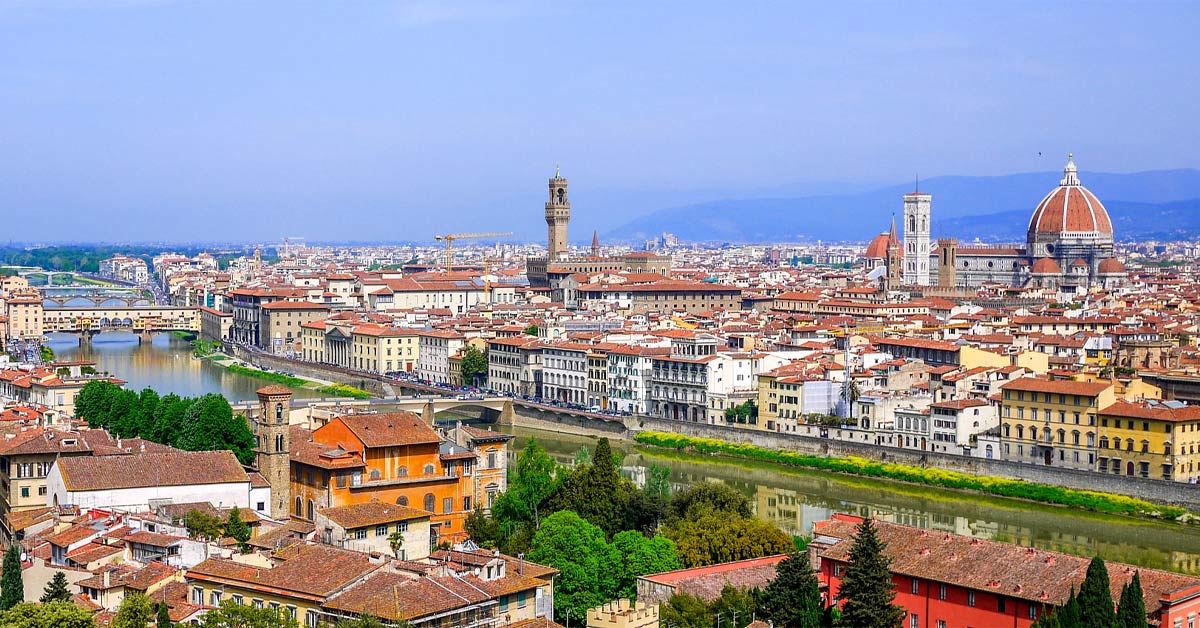
Florence is the birthplace of the Renaissance—the artistic and cultural revolution that transformed Europe between the 14th-17th centuries. If you've never studied art history, Renaissance art can seem intimidating. Who were these artists? Why are these paintings famous? What am I supposed to notice?
This guide explains Renaissance art in Florence for beginners: what the Renaissance was, why it happened in Florence, key artists and masterpieces, and what to look for when visiting Florence's museums. No art degree required.
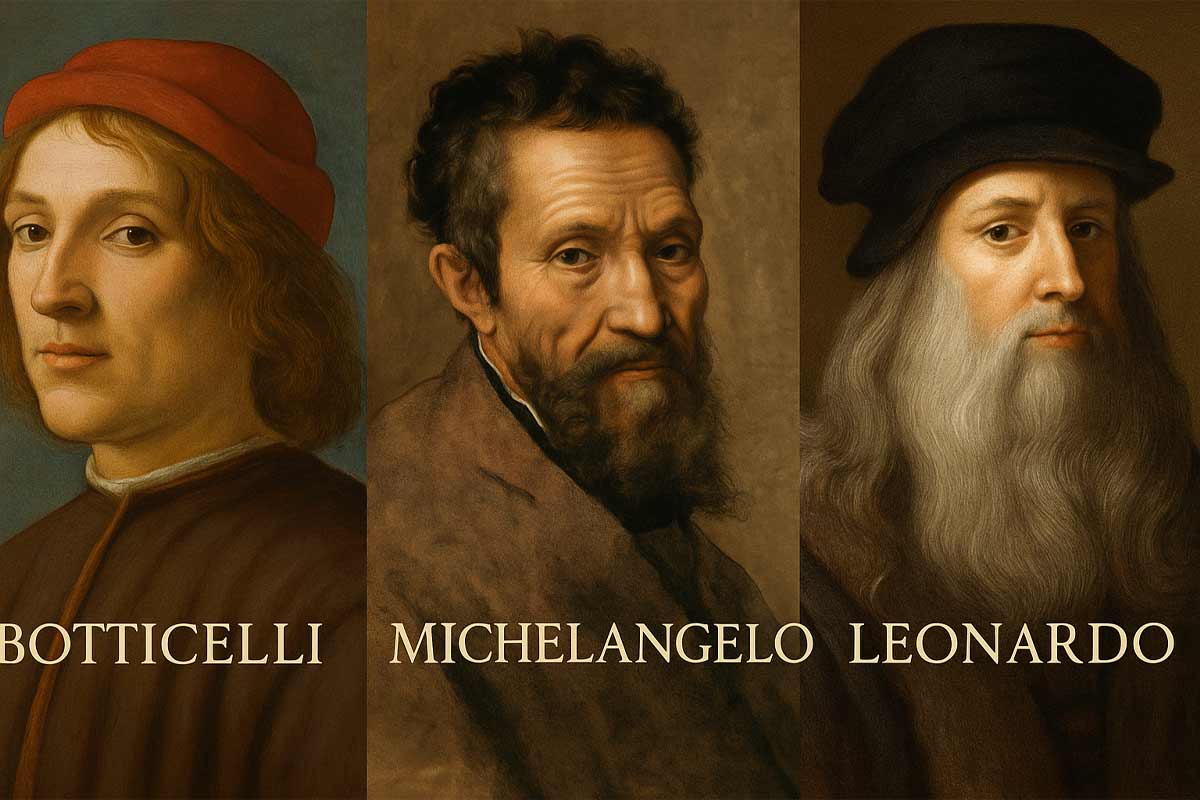
Florence is home to the world's greatest concentration of Renaissance art, created during the 15th-16th centuries.
What Was the Renaissance?
The Basics
"Renaissance" means "rebirth" in French.
Rebirth of What?
Classical (ancient Greek and Roman) knowledge, art, philosophy, and culture that had been lost during the Middle Ages.
When:
Roughly 1300-1600, starting in Florence
Why "Renaissance"?
During the Middle Ages (500-1300 AD), European art focused heavily on religion, with flat, stylized figures and gold backgrounds. Classical Greek and Roman achievements in realism, anatomy, and perspective were forgotten.
The Renaissance Rediscovered:
- Realistic human anatomy
- Mathematical perspective (3D space on 2D surfaces)
- Classical themes (Greek/Roman mythology)
- Humanism (celebrating human achievement, not just religion)
Result:
Paintings looked real for the first time in centuries. Sculptures captured lifelike anatomy. Architecture revived classical columns and proportions.
Why Florence?
Why did the Renaissance start in Florence specifically?
1. Wealth:
Florence was one of Europe's richest cities. The Florentine florin (gold coin) was the international currency. Banking families (especially the Medici) had enormous wealth to patronize artists.
2. Medici Patronage:
The Medici family ruled Florence and spent fortunes commissioning art. Artists like Michelangelo, Leonardo, and Botticelli worked on Medici commissions. Without Medici money, the Renaissance would have been drastically different.
3. Republican Pride:
Florence was a republic (not a monarchy), and citizens took fierce pride in their city. Commissioning beautiful art and architecture demonstrated Florence's sophistication and power.
4. Classical Roman Heritage:
Italy was filled with Roman ruins. Florentines could study ancient sculpture and architecture directly, inspiring Renaissance revival of classical forms.
5. Guild System:
Florence's powerful guilds (trade organizations) competed to commission art for their churches and buildings, creating constant demand for artistic innovation.
6. Intellectual Climate:
Florence attracted scholars, philosophers, and artists. The University of Florence and informal academic circles fostered humanist thinking that fueled Renaissance ideas.
Key Renaissance Concepts (Explained Simply)

Renaissance artists revolutionized painting with perspective, realism, and humanistic themes.
1. Perspective
What It Is:
Mathematical system for depicting 3D space on a 2D surface (painting).
Before Perspective:
Medieval paintings looked flat. Buildings, people, and objects appeared stacked on top of each other without depth.
After Perspective:
Renaissance paintings created the illusion of space—you feel you could walk into the scene.
Who Invented It:
Filippo Brunelleschi (architect, 1413) discovered linear perspective using mathematical principles.
What to Notice:
Look for vanishing points—the spot where parallel lines (like roads, buildings) converge in the distance. This creates depth.
Example:
Masaccio's "Holy Trinity" (Santa Maria Novella, Florence) is one of the first paintings to use perfect mathematical perspective. The barrel-vaulted ceiling looks three-dimensional.
2. Humanism
What It Is:
Philosophical movement emphasizing human potential, reason, and achievement (vs. Middle Ages' focus solely on God and afterlife).
Impact on Art:
- Humans depicted realistically, with emotions and personalities
- Classical (pagan) themes became acceptable alongside Christian subjects
- Nude figures celebrated human beauty (Greek/Roman influence)
- Portraits showed individual identity
Example:
Michelangelo's David—a nude biblical hero depicted as an idealized human form celebrating physical perfection.
3. Chiaroscuro
What It Is:
Italian for "light-dark." Technique using strong contrasts between light and shadow to create volume and drama.
What to Notice:
Figures appear three-dimensional because one side is brightly lit while the other fades into shadow.
Master:
Caravaggio (later Renaissance) perfected chiaroscuro, but Leonardo da Vinci pioneered it.
Example:
Leonardo's "Annunciation" (Uffizi)—notice how light and shadow model Mary's face and robes.
4. Contrapposto
What It Is:
Natural standing pose where weight rests on one leg, creating a relaxed, asymmetrical stance.
Before Contrapposto:
Medieval statues stood stiffly, weight evenly distributed (unnatural).
After Contrapposto:
Renaissance sculptures look alive—weight shifted, hips tilted, shoulders angled.
Origin:
Classical Greek sculpture (Renaissance artists rediscovered it).
Example:
Michelangelo's David—weight on right leg, left leg relaxed, hips and shoulders angled. This creates dynamism.
5. Sfumato
What It Is:
Leonardo da Vinci's technique of soft, almost imperceptible transitions between colors and tones—no hard edges.
Effect:
Creates atmosphere, softness, and mysterious quality.
Example:
Mona Lisa's enigmatic smile (Louvre, Paris)—you can't quite see where her lips end and skin begins. Leonardo used sfumato throughout the Mona Lisa. In Florence, his "Annunciation" (Uffizi) demonstrates early sfumato.
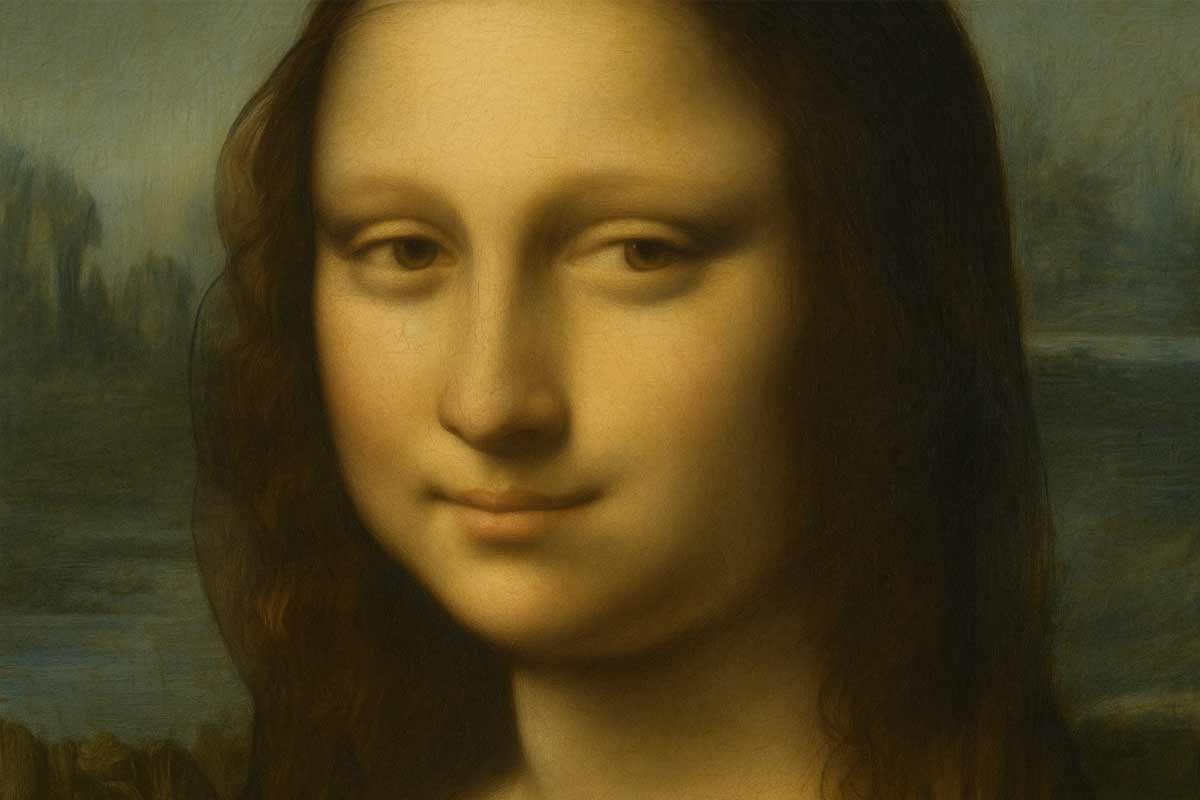
Leonardo da Vinci perfected sfumato, a subtle blending technique that creates soft, hazy transitions.
Florence's Master Renaissance Artists
Michelangelo Buonarroti (1475-1564)
Who He Was:
Sculptor, painter, architect, poet. Considered the greatest artist in history.
Florence Connection:
Born near Florence, trained in Florence under the Medici, created his most famous works for Florence.
Key Works in Florence:
- David (Accademia Gallery): 17-foot marble sculpture, Renaissance masterpiece
- Medici Tombs (San Lorenzo): Sculptures of Day, Night, Dawn, Dusk
- Laurentian Library (San Lorenzo): Architectural masterpiece
- Unfinished Prisoners (Accademia): Sculptures seemingly emerging from marble blocks
What to Notice:
Michelangelo's mastery of human anatomy. Every muscle, vein, and tendon is perfectly rendered. His sculptures look alive.
Style:
Powerful, muscular figures (terribilità—Italian for "awe-inspiring power")
Leonardo da Vinci (1452-1519)
Who He Was:
Painter, scientist, inventor, polymath. Renaissance ideal of universal genius.
Florence Connection:
Born near Florence (Vinci, 25 km away), trained in Florence, worked in Florence throughout his career.
Key Works in Florence:
- Annunciation (Uffizi): Early Leonardo work showing mastery of perspective, light, and botanical accuracy
- Adoration of the Magi (Uffizi): Unfinished but brilliant composition
What to Notice:
Leonardo's obsessive detail—flowers, fabrics, atmospheric effects are all meticulously rendered. His understanding of light, shadow, and anatomy was unparalleled.
Style:
Soft (sfumato), mysterious, scientifically accurate
Sandro Botticelli (1445-1510)
Who He Was:
Painter working for the Medici family. Master of mythological and religious scenes.
Florence Connection:
Born, lived, and worked entire life in Florence. Medici family's favorite artist.
Key Works in Florence:
- Birth of Venus (Uffizi): Iconic image of Venus emerging from sea on shell
- Primavera (Spring) (Uffizi): Mythological allegory in a flowered garden
- Adoration of the Magi (Uffizi): Religious scene with Medici family members depicted
What to Notice:
Botticelli's flowing lines, graceful figures, and decorative beauty. His Venus is sensual but ethereal—idealized beauty.
Style:
Lyrical, decorative, linear, elegant
Donatello (1386-1466)
Who He Was:
Sculptor. Revived classical sculpture techniques lost since Roman times.
Florence Connection:
Born and worked in Florence. His sculptures define Early Renaissance style.
Key Works in Florence:
- David (Bargello Museum): First free-standing nude sculpture since antiquity (bronze)
- St. George (Bargello): Early marble masterpiece showing determination and courage
- Judith and Holofernes (Palazzo Vecchio): Bronze sculpture of biblical heroine
What to Notice:
Donatello's psychological intensity. His figures have personality and emotion—revolutionary for his time.
Style:
Realistic, emotionally expressive, classically influenced
Filippo Brunelleschi (1377-1446)
Who He Was:
Architect and engineer. Discovered linear perspective.
Florence Connection:
Born in Florence. Designed Florence's most iconic structure: the Duomo cupola.
Key Work in Florence:
- Duomo Cupola (Dome): Engineering marvel—largest brick dome ever built (still)
What to Notice:
The dome's size and the fact it was built without scaffolding (Brunelleschi invented a revolutionary double-shell design).
Legacy:
Proved Renaissance architects could surpass Roman engineering.
Raphael Sanzio (1483-1520)
Who He Was:
Painter known for harmonious compositions and graceful figures.
Florence Connection:
Studied in Florence (1504-1508), influenced by Leonardo and Michelangelo.
Key Works in Florence:
- Madonna of the Goldfinch (Uffizi): Tender Madonna and Child scene
- Portrait of Leo X (Uffizi): Pope Leo X (a Medici) depicted with cardinals
What to Notice:
Raphael's perfect balance and harmony. Everything feels composed and serene.
Style:
Harmonious, balanced, graceful

The Florentine Renaissance spanned 200 years, from Giotto's innovations to Michelangelo's mastery.
Must-See Renaissance Masterpieces in Florence
At the Uffizi Gallery
1. Botticelli's "Birth of Venus"
- Room: Botticelli Room (Rooms 10-14)
- What It Shows: Venus (goddess of love) emerging from the sea on a shell, blown by wind gods, greeted by a nymph with a cloak
- Why It's Famous: Iconic Renaissance image, first large-scale nude Venus since antiquity, exquisite beauty
- What to Notice: Venus's contrapposto pose, flowing hair, delicate modeling of her body, decorative gold details
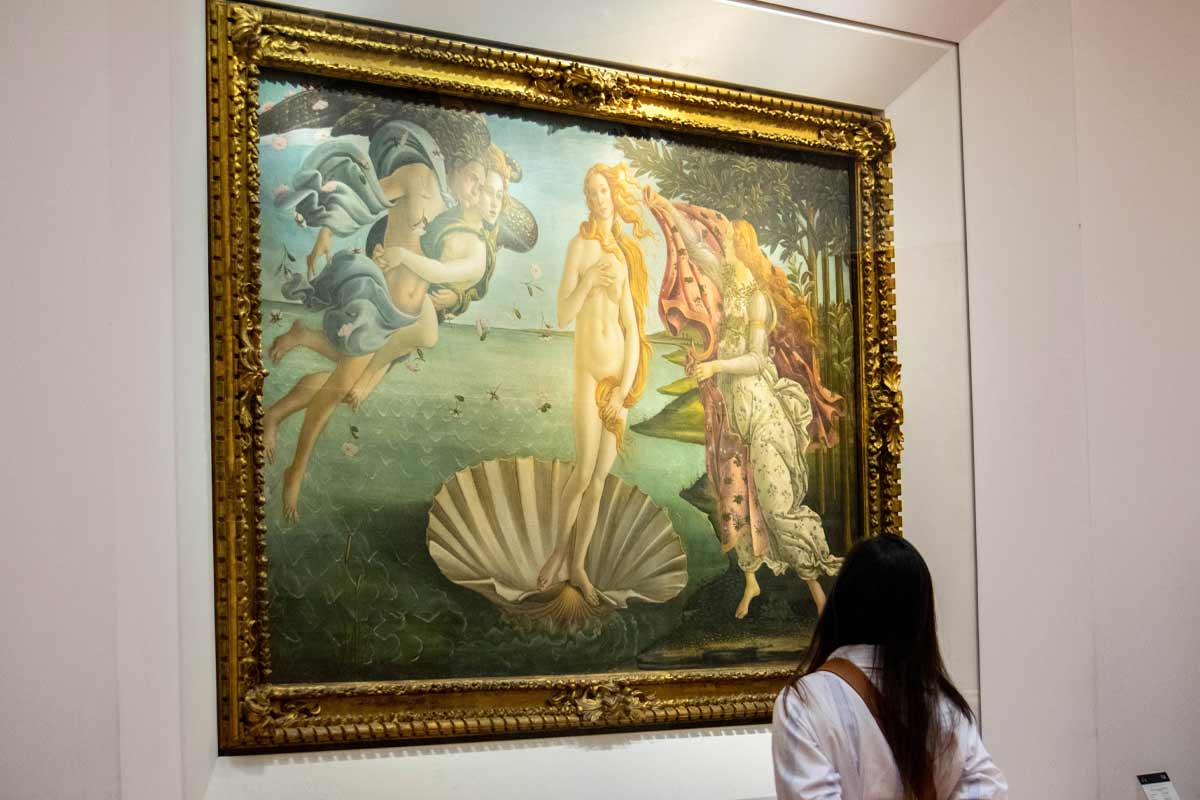
Botticelli's Birth of Venus combines classical mythology with Christian symbolism in perfect Renaissance harmony.
2. Botticelli's "Primavera" (Spring)
- Room: Botticelli Room
- What It Shows: Allegorical garden scene with Venus, Mercury, Three Graces, Flora, Zephyr, and Chloris
- Why It's Famous: Complex mythological allegory, over 500 accurately rendered plant species
- What to Notice: Flowing movement, interconnected figures, botanical accuracy
3. Leonardo da Vinci's "Annunciation"
- Room: Leonardo Room (Room 35 or nearby)
- What It Shows: Angel Gabriel announcing to Mary that she'll bear Jesus
- Why It's Famous: Early Leonardo masterpiece showing his genius
- What to Notice: Perfect perspective (marble table, building), botanical accuracy of plants, soft light, Mary's gentle expression
4. Michelangelo's "Doni Tondo"
- Room: Michelangelo Room
- What It Shows: Circular painting (tondo) of Holy Family
- Why It's Famous: Michelangelo's only surviving panel painting
- What to Notice: Sculptural quality (figures look like painted sculpture), vibrant colors, complex pose of Mary twisting to receive baby Jesus
5. Caravaggio's "Medusa"
- Room: Caravaggio Room
- What It Shows: Severed head of Medusa screaming (painted on a ceremonial shield)
- Why It's Famous: Dramatic realism, Caravaggio's revolutionary use of light and shadow
- What to Notice: Blood dripping, snakes writhing, Medusa's horrified expression frozen at moment of beheading
6. Raphael's "Madonna of the Goldfinch"
- Room: Raphael Room
- What It Shows: Mary watching child Jesus and John the Baptist play with a goldfinch
- Why It's Famous: Perfect Renaissance composition—harmonious, balanced, serene
- What to Notice: Pyramidal composition, tender expressions, soft modeling
At the Accademia Gallery
1. Michelangelo's "David"
- Location: Tribune (domed room at end of main gallery)
- What It Shows: Biblical hero David before his battle with Goliath
- Why It's Famous: Greatest sculpture ever created, perfect Renaissance human form
- What to Notice: Anatomical perfection, psychological intensity (furrowed brow, alert gaze), contrapposto stance, huge scale (17 feet)
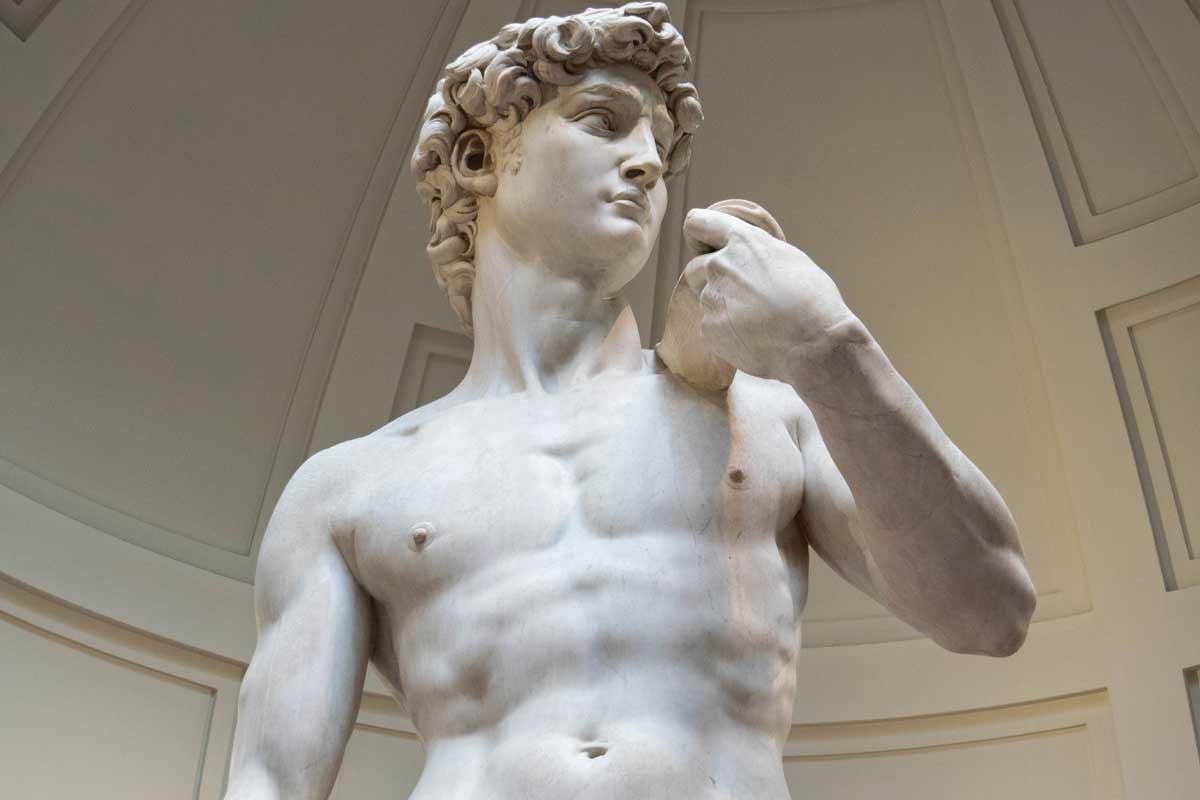
Michelangelo's David (1504) represents the peak of Renaissance sculptural achievement and humanist ideals.
2. Michelangelo's "Prisoners" (Slaves)
- Location: Gallery leading to David
- What It Shows: Four unfinished sculptures of figures seemingly trapped in marble blocks
- Why It's Famous: Shows Michelangelo's process—he believed figures existed in the marble, and he "released" them
- What to Notice: Figures emerging from rough stone, varying degrees of completion, sense of struggle
At Other Florence Locations
Bargello Museum:
- Donatello's bronze David (first nude sculpture since antiquity)
- Donatello's St. George
- Verrocchio's David
- Michelangelo's early works (Bacchus, Brutus)
Santa Croce Church:
- Giotto frescoes (Proto-Renaissance)
- Donatello's Annunciation
- Tombs of Michelangelo, Galileo, Machiavelli
Medici Chapels (San Lorenzo):
- Michelangelo's Medici Tombs with Day, Night, Dawn, Dusk sculptures
- Architectural masterpiece
Duomo (Cathedral):
- Brunelleschi's revolutionary dome
- Vasari's Last Judgment fresco inside dome
- Ghiberti's bronze Baptistery doors ("Gates of Paradise")
How to Appreciate Renaissance Art (Even If You're Not an Expert)

Decode Renaissance art by understanding common symbols: lilies (purity), halos (divinity), perspective (humanity).
1. Notice the Realism
Compare mentally to medieval art:
Medieval art looked flat, stylized, symbolic. Renaissance art looks real—three-dimensional, lifelike, with accurate anatomy and perspective.
What to Look For:
- Do figures look like they have weight and volume?
- Can you sense depth (things closer/farther)?
- Are expressions and emotions realistic?
2. Look for Light and Shadow
Renaissance innovation:
Artists mastered chiaroscuro—using light and shadow to create volume.
Try this:
Look at a figure's face. Notice how one side is lit and gradually fades to shadow. This makes it look three-dimensional, like sculpture.
3. Study the Composition
Composition = how elements are arranged in the painting.
Renaissance masters created balance:
- Pyramidal compositions (stable, harmonious)
- Figures arranged to guide your eye through the scene
- Central focal point
Try this:
In Botticelli's "Birth of Venus," notice how the figures form a balanced composition with Venus at center, wind gods on left, nymph on right.
4. Check the Details
Renaissance artists were obsessed with detail:
- Fabrics show texture (silk, velvet, linen)
- Jewelry is accurately rendered
- Plants are botanically correct species
- Architecture follows mathematical proportions
Try this:
Look at Leonardo's "Annunciation." Identify individual plant species in the garden (lilies, cypress trees, wildflowers—all real species).
5. Think About the Story
Most Renaissance art tells a story:
- Biblical narratives (Annunciation, Crucifixion, Last Supper)
- Classical mythology (Birth of Venus, Primavera)
- Historical events
- Portraits
Ask yourself:
- What moment is depicted?
- What are the figures doing?
- What's the emotional tone?
6. Notice the Emotions
Renaissance humanism:
Artists depicted real human emotions—joy, sorrow, fear, determination, love.
Try this:
Look at Michelangelo's David's face. See his furrowed brow, focused gaze, slightly open mouth. He's tense, alert, preparing mentally for battle. This psychological realism was revolutionary.
Planning Your Renaissance Art Tour in Florence

Plan your Renaissance art tour with this map showing the Uffizi, Accademia, and other key locations.
Essential Museums
1. Uffizi Gallery (Must-Visit)
- What: World's greatest Renaissance painting collection
- Must-See: Botticelli (Birth of Venus, Primavera), Leonardo, Michelangelo, Raphael
- Time Needed: 2-3 hours minimum
- Tickets: Book skip-the-line weeks ahead
2. Accademia Gallery (Must-Visit)
- What: Michelangelo's David + other Michelangelo sculptures
- Must-See: David, Prisoners
- Time Needed: 1-1.5 hours
- Tickets: Book skip-the-line weeks ahead
3. Bargello Museum
- What: Renaissance sculpture museum
- Must-See: Donatello's David, Michelangelo's early works
- Time Needed: 1.5 hours
- Tickets: Usually less crowded; tickets are often available on the day
4. Medici Chapels
- What: Michelangelo's Medici Tombs and architecture
- Must-See: Day, Night, Dawn, Dusk sculptures
- Time Needed: 45 minutes
- Tickets: Book ahead during peak season
One-Day Renaissance Art Itinerary
Plan this day for Tuesday to Sunday: the Accademia, the Medici Chapels and the Uffizi are closed on Mondays.
8:15am - Accademia Gallery (David)
- See Michelangelo's David when crowds are smallest
- 1-1.5 hours
10am - San Lorenzo & Medici Chapels
- Walk to nearby San Lorenzo church and Medici Chapels
- See Michelangelo's Medici Tombs
- 1 hour
11:15am - Coffee Break
- Traditional Florentine café
11:30am - Duomo Complex
- See Brunelleschi's dome (exterior), Baptistery doors
- Climb Giotto's Bell Tower if time allows, or the dome (timed reservation required, book ahead)
- 45 minutes to 1.5 hours
1pm - Lunch Break
2:30pm - Uffizi Gallery
- Skip-the-line entry
- Focus on highlights: Botticelli, Leonardo, Michelangelo, Raphael
- 2.5-3 hours
5:30pm - Piazza della Signoria
- See outdoor sculpture gallery (Loggia dei Lanzi)
- Palazzo Vecchio exterior
- 30 minutes
6pm - Done!
You've seen Florence's Renaissance essentials.
With More Time
Day 2:
- Bargello Museum (sculpture)
- Santa Croce (Giotto frescoes, artist tombs)
- Palazzo Pitti (later Renaissance + Baroque)
- Boboli Gardens
Day 3:
- Santa Maria Novella (Masaccio frescoes)
- Palazzo Vecchio interior (Vasari frescoes)
- Brancacci Chapel (Masaccio frescoes—Proto-Renaissance)
Renaissance Art FAQs
Do I need a guide for Renaissance art?
Depends on your interest level:
Yes, if:
- You want deeper understanding and context
- You've never studied art history
- You want to know stories behind the works
- Limited time (guides focus on highlights efficiently)
No, if:
- You prefer exploring at your own pace
- You've studied Renaissance art
- Budget is very tight
- You're happy with audio guides or apps
Middle Ground:
Book a guided tour for one major museum (Uffizi or Accademia), then explore others independently.
How do I avoid art museum fatigue?
"Museum fatigue" is real. After 2-3 hours, your brain stops processing art.
Strategies:
- Visit major museums on separate days (don't do Uffizi + Accademia same day)
- Take breaks—sit down, look out windows, rest your eyes
- Focus on highlights (don't try to see everything)
- Limit museum time to 2-3 hours maximum per visit
- Alternate art with other activities (walking, eating, outdoor sights)
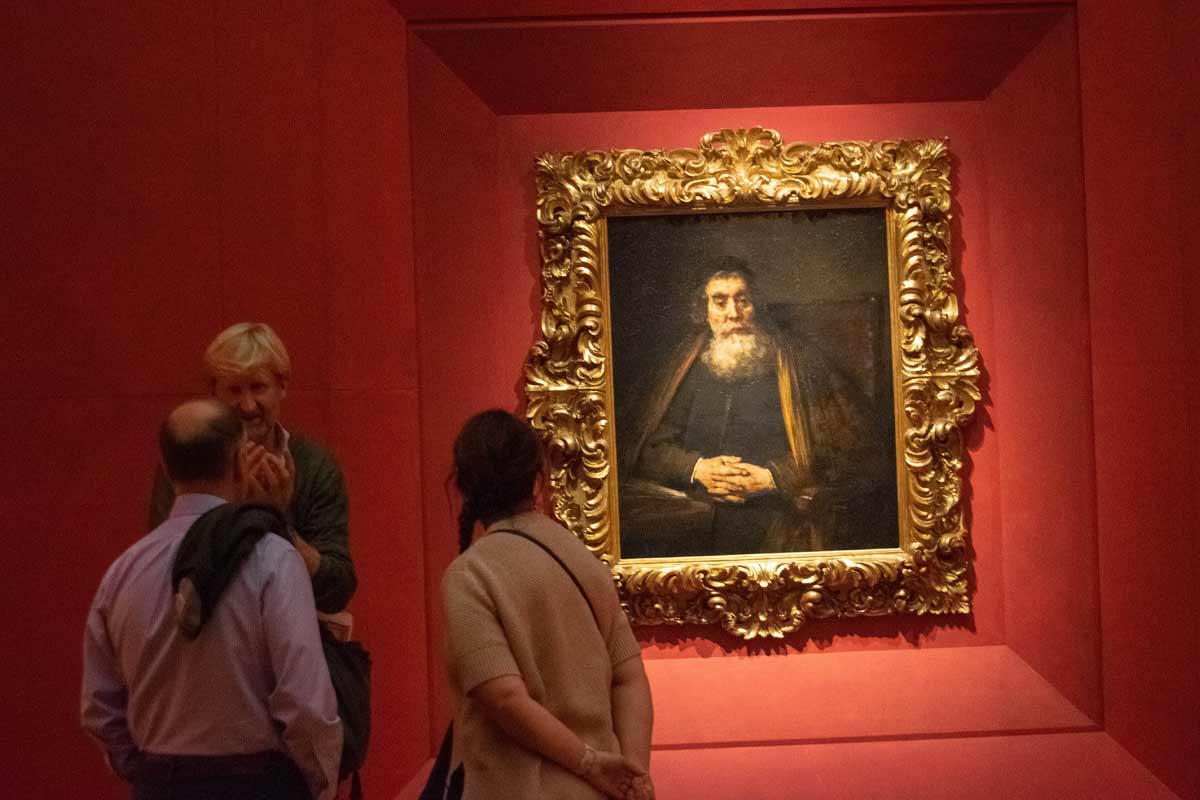
Take your time with Renaissance masterpieces - most experts recommend 2-3 hours at the Uffizi alone.
What if I don't "get" Renaissance art?
Totally normal! Renaissance art can feel foreign if you're not familiar with:
- Christian biblical stories
- Classical mythology
- Artistic techniques
Don't worry:
- You don't need to "get" everything
- Focus on what speaks to you personally
- Appreciate the technical skill even if themes don't resonate
- Read brief descriptions (most museums provide them)
- Consider a guided tour (context helps enormously)
Can I see Florence's Renaissance art in one day?
Yes, highlights only:
Follow the one-day itinerary above—you'll see David, Uffizi masterpieces, and Duomo.
But:
You'll miss a lot (Bargello, Medici Chapels, many churches). Consider 2-3 days for a more complete experience.
Conclusion: Why Renaissance Art Still Matters
Five centuries later, Florence's Renaissance art remains humanity's creative peak. Why does it still matter?
Technical Mastery:
No artists before or since have matched Renaissance masters' combination of technical skill, anatomical knowledge, and mathematical precision.
Humanism:
Renaissance art celebrates human potential, beauty, and achievement—values that define modern Western culture.
Beauty:
Simply put, Renaissance art is extraordinarily beautiful. Botticelli's Venus, Michelangelo's David, Leonardo's mysterious figures—they're timeless.
Florence's Gift:
Florence gave the world the Renaissance, which transformed European art, science, and philosophy. Walking through Florence's museums, you're seeing the works that changed civilization.
You Don't Need to Be an Expert:
To appreciate Renaissance art, you just need to look—really look. Notice the details, the emotions, the beauty. The masterpieces speak for themselves.
Ready to experience Renaissance Florence? Join our Uffizi and Accademia expert tours with skip-the-line access and local art historians.
Questions about Florence's art? Our team offers personalized guidance for experiencing Renaissance masterpieces.
Book a guided tour in Florence
We are a licensed Florence tour operator running small-group museum tours with local guides. Browse our tours.
Florence With Locals S.r.l. — Via Taddea 35/R, 50123 Firenze (FI), Italy · P.IVA / VAT IT07564730484 · Registro Imprese di Firenze 07564730484 · REA FI-712305 · SCIA – Agenzia di viaggi e tour operator (ATECO 79.11) — SUAP Comune di Firenze, prot. 07564730484-23072026-0853.
contact@florencewithlocals.com · +39 327 249 1282 · PEC withlocals@pec.it