Uffizi Gallery in 2 Hours: Masterpieces to See (2026 Guide)
Discover the top 10 must-see masterpieces at the Uffizi Gallery. From Botticelli's Birth of Venus to Leonardo's Annunciation, plan your perfect 2-hour visit with our expert guide.
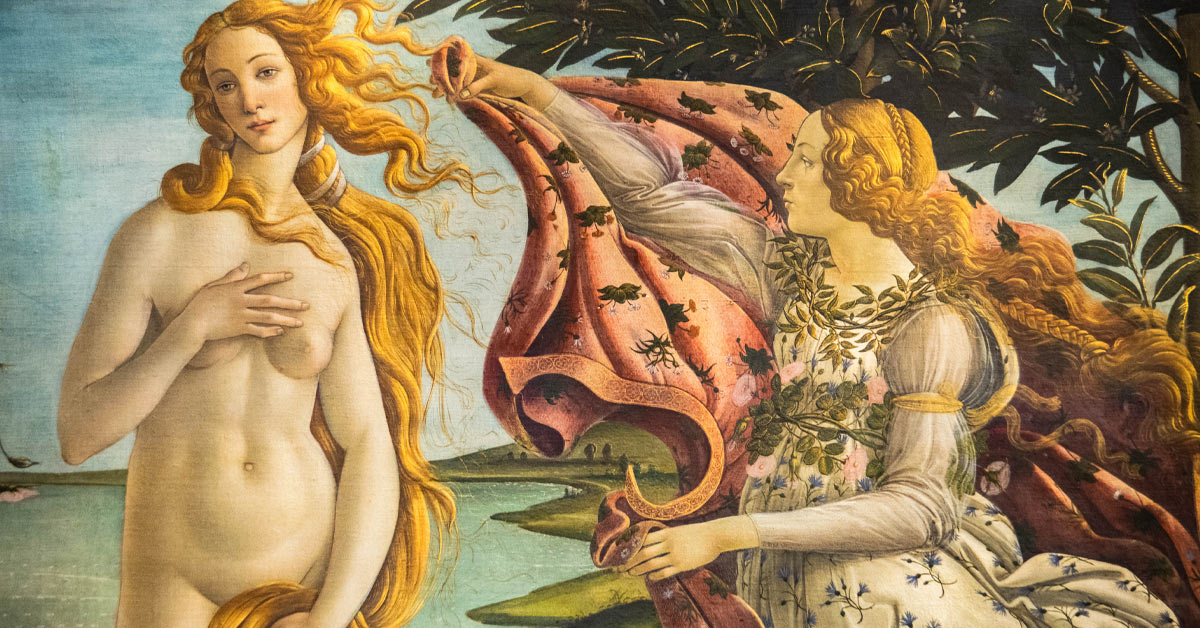
The Uffizi Gallery holds the world's finest collection of Renaissance art, but with 101 rooms and over 1,700 works on display, knowing what to see in Uffizi Gallery can be overwhelming. This comprehensive guide reveals the top 10 must-see masterpieces, provides a strategic 2-hour itinerary with exact room numbers, and shares expert tips to maximize your visit to one of the world's greatest art museums.
What is the Uffizi Gallery?
The Galleria degli Uffizi is Florence's most visited museum, attracting over 2 million visitors annually. Built in 1560-1580 by Giorgio Vasari, the U-shaped building originally housed the administrative offices ("uffizi" means "offices") of the Medici family. Today, it's home to an unparalleled collection of Renaissance masterpieces, particularly strong in works from the Florentine and Venetian schools.
Quick Facts:
- Location: Piazzale degli Uffizi, 6, 50122 Florence
- Built: 1560-1580 (opened as gallery 1765)
- Collection Size: 1,700+ works across 101 rooms
- Annual Visitors: 2+ million
- Most Famous Works: Botticelli's Birth of Venus, Leonardo's Annunciation
- Recommended Visit Time: 2-3 hours for highlights, 4-5 hours for comprehensive visit
The Top 10 Must-See Masterpieces at the Uffizi Gallery
1. The Birth of Venus by Sandro Botticelli (Room 10-14)
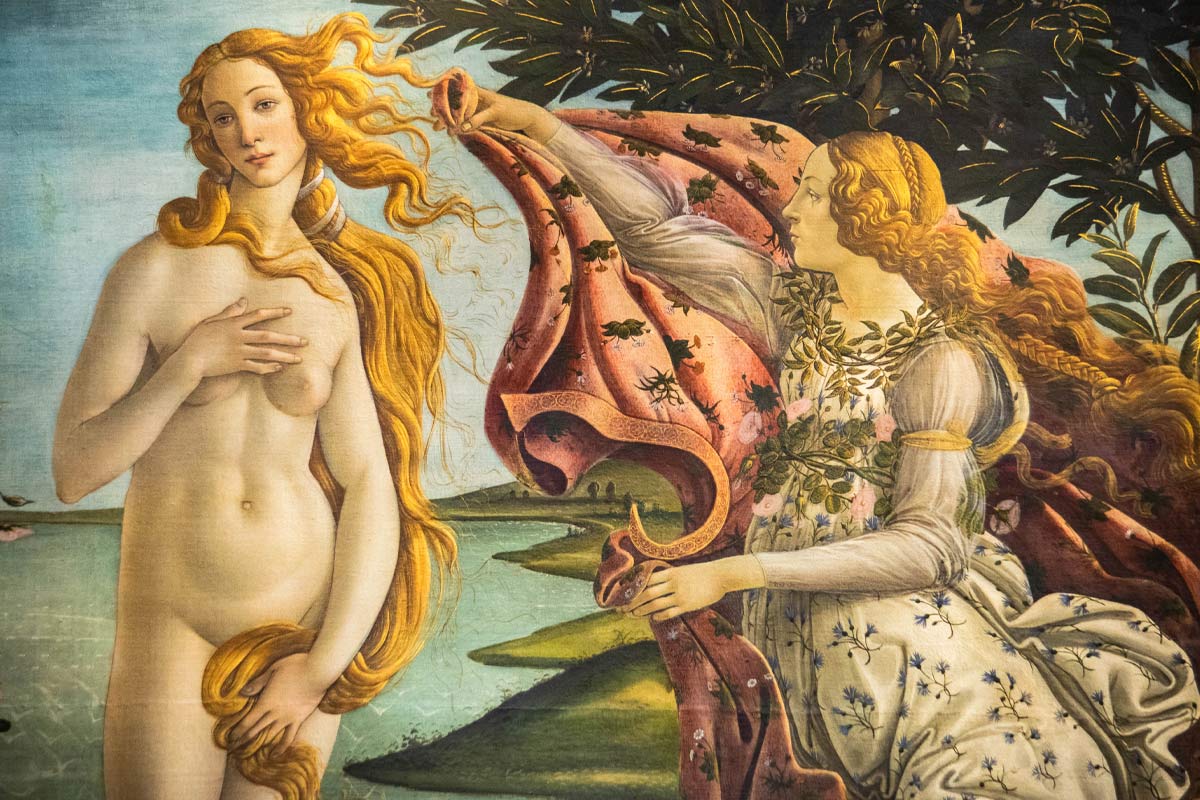
Botticelli's Birth of Venus (1484-1486), the most iconic painting at the Uffizi Gallery, depicting the goddess emerging from the sea on a shell.
Why It's Unmissable:
Botticelli's Birth of Venus (1484-1486) is arguably the most iconic painting in the Uffizi Gallery and one of the most recognizable images in Western art. This masterpiece depicts the goddess Venus emerging from the sea as a fully grown woman, arriving at the shore after her birth.
What to Look For:
- Venus's impossibly long neck and sloping shoulders (Renaissance beauty ideals)
- The scallop shell symbolizing fertility and birth
- Zephyr (wind god) and Chloris (spring nymph) blowing Venus to shore
- The attendant ready to cover Venus with a flower-embroidered cloak
- The gold details in the hair and waves (traces of gold leaf)
Historical Context:
Commissioned by Lorenzo di Pierfrancesco de' Medici for his villa at Castello, this painting revived classical mythology in Christian Renaissance Florence—a radical artistic choice at the time.
2. Primavera (Spring) by Sandro Botticelli (Room 10-14)
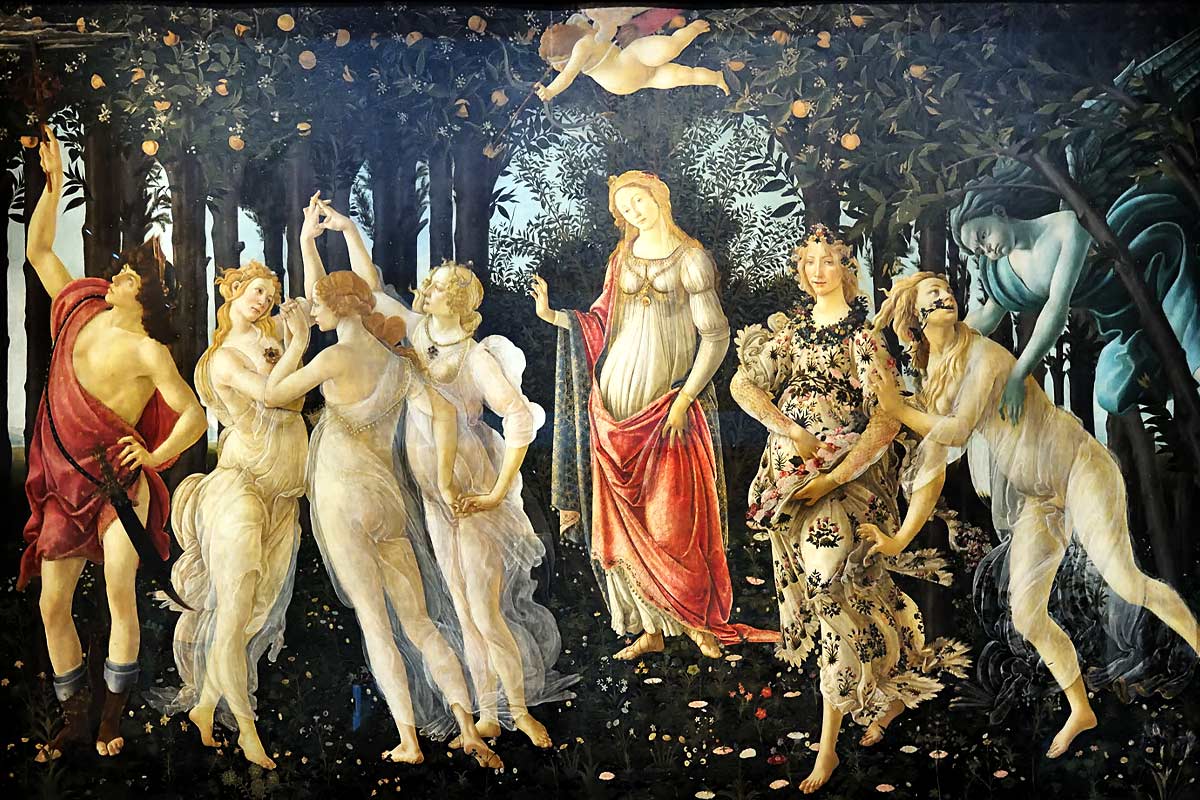
Botticelli's Primavera (1482), an enigmatic Renaissance masterpiece featuring nine mythological figures in a garden of eternal spring.
The Composition:
Also called "Allegory of Spring," this enigmatic masterpiece (1482) is displayed near Birth of Venus. It features nine figures from classical mythology in a grove of orange and fruit trees.
Decoding the Symbols:
- Right side: Zephyr pursues nymph Chloris, who transforms into Flora (goddess of flowers)
- Center: Venus presides with Cupid above
- Left side: Three Graces dance while Mercury disperses clouds
- Contains over 500 identified plant species, each symbolically significant
- Debates continue about the exact meaning—likely related to love, marriage, and spring's renewal
3. Annunciation by Leonardo da Vinci (Room 35)
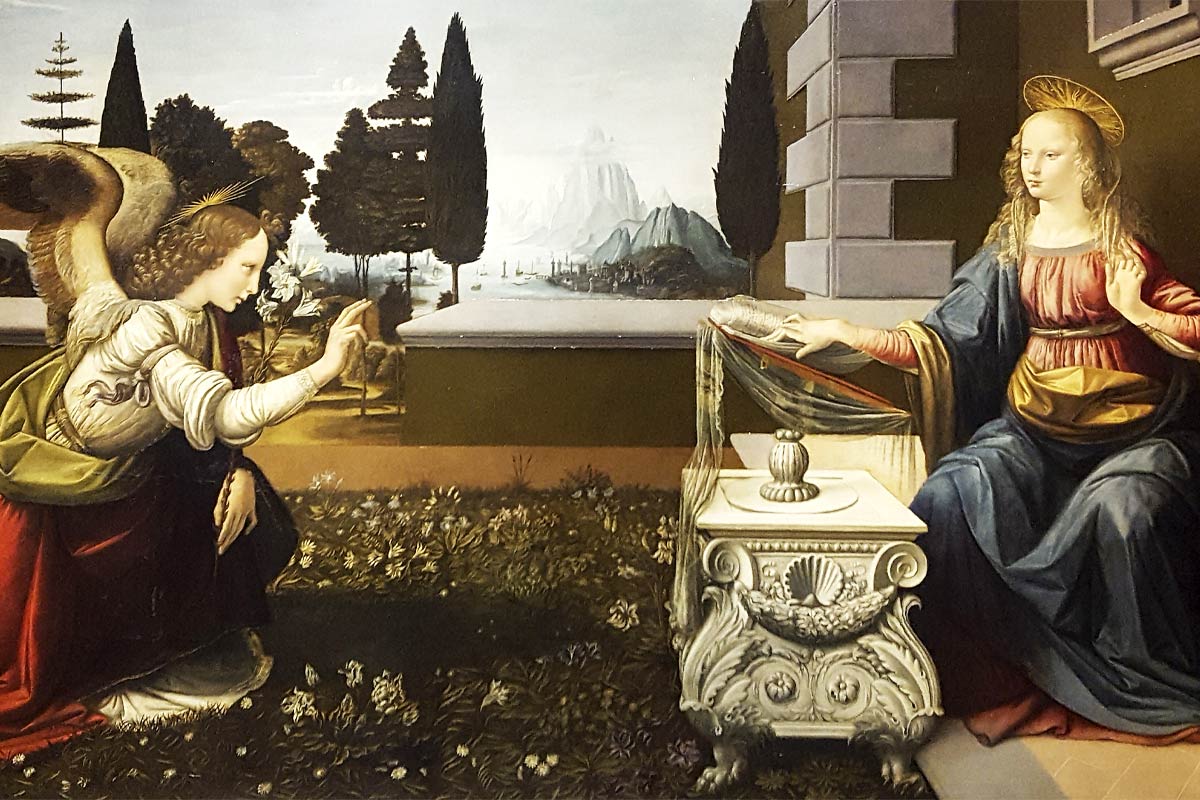
Leonardo da Vinci's Annunciation (1472-1475), painted when the artist was just 20, showcasing his early mastery of perspective and atmospheric effects.
Early Genius:
Painted around 1472-1475 when Leonardo was just 20 years old and still in Verrocchio's workshop, this work already demonstrates his revolutionary approach to art.
Leonardo's Innovations:
- Atmospheric perspective: Background mountains fade into bluish haze
- Scientific accuracy: The angel's wings based on actual bird anatomy
- Architectural detail: The marble lectern decorated with classical motifs
- Botanical precision: The meadow flowers painted with scientific observation
What Makes It Special:
Look for Leonardo's characteristic sfumato technique (soft, almost imperceptible transitions) and his attention to light and shadow that creates extraordinary depth.
4. Doni Tondo (Holy Family) by Michelangelo (Room 41)
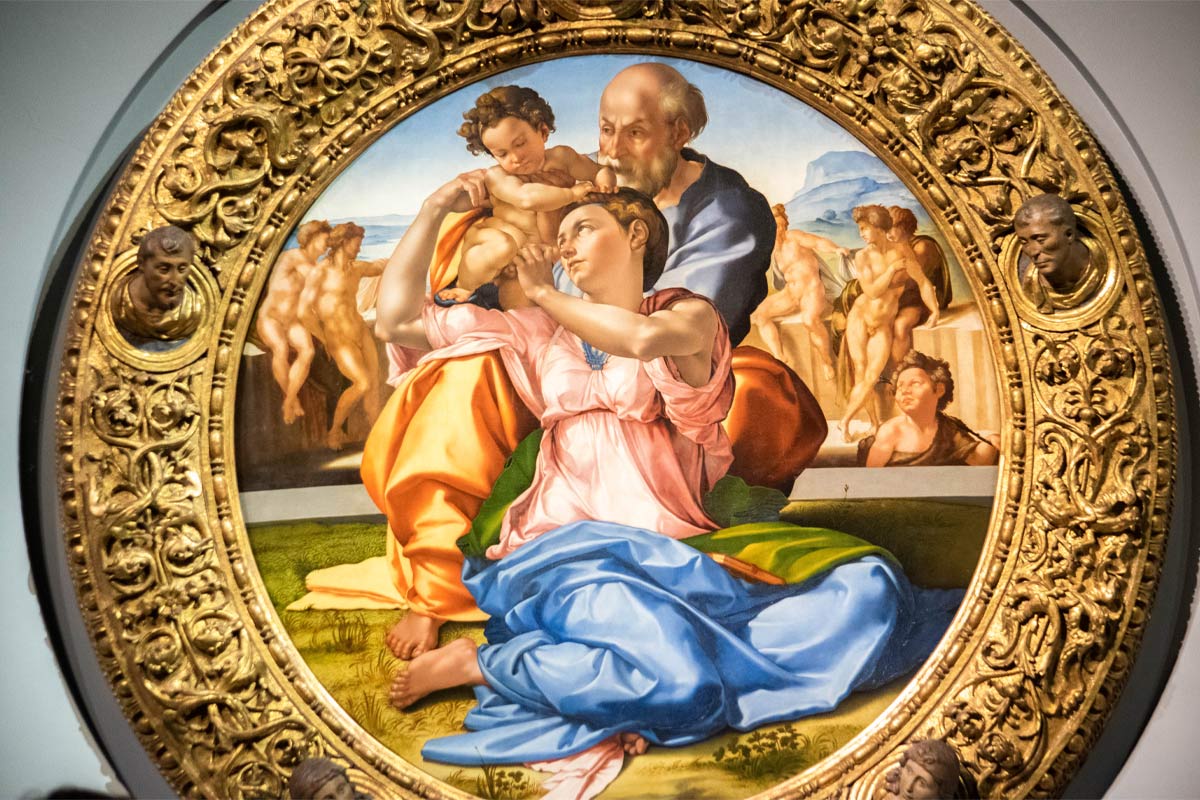
Michelangelo's Doni Tondo (1506-1508), the only universally accepted panel painting by the Renaissance master, featuring vibrant colors and sculptural forms.
Michelangelo's Only Panel Painting:
The Doni Tondo (1506-1508) is the only universally accepted panel painting by Michelangelo Buonarroti. Commissioned by wealthy Florentine banker Agnolo Doni, possibly for his marriage to Maddalena Strozzi.
Revolutionary Composition:
- Twisted pose: Mary's serpentine turn demonstrates Michelangelo's sculptural approach to painting
- Vibrant colors: Bright, acid colors that shocked contemporaries and influenced Mannerism
- Muscular forms: Even Mary has the muscular definition typical of Michelangelo's style
- Background figures: Five nude male figures (their meaning debated by scholars)
In the Original Frame:
The painting remains in its magnificent original carved frame, designed by Michelangelo himself—a rarity in museum displays.
5. Venus of Urbino by Titian (Room 83)
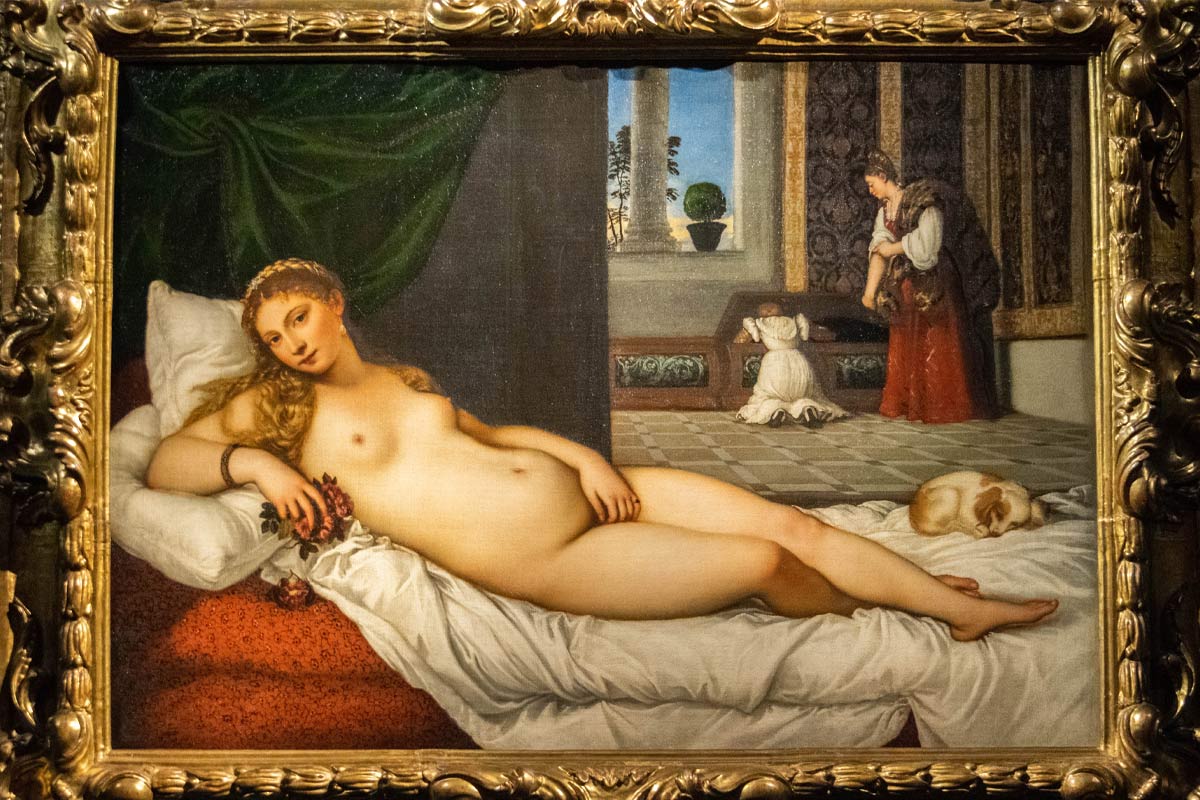
Titian's Venus of Urbino (1538), a masterpiece of Venetian Renaissance art showcasing sensual beauty and rich color that influenced generations of artists.
Venetian Sensuality:
Titian's Venus of Urbino (1538) brings the artistic focus from Florence to Venice. This painting of a nude Venus reclining on a bed influenced countless later artists, including Édouard Manet's Olympia.
Symbolism and Scandal:
- The little dog at Venus's feet (symbol of fidelity)
- The myrtle plant on the windowsill (symbol of Venus and marriage)
- The servants searching through the wedding chest (cassone)
- The direct gaze meeting the viewer's eyes—remarkably intimate for the period
- The painting's eroticism caused controversy even in the relatively liberal Renaissance
6. Madonna of the Goldfinch by Raphael (Room 66)
Perfect Harmony:
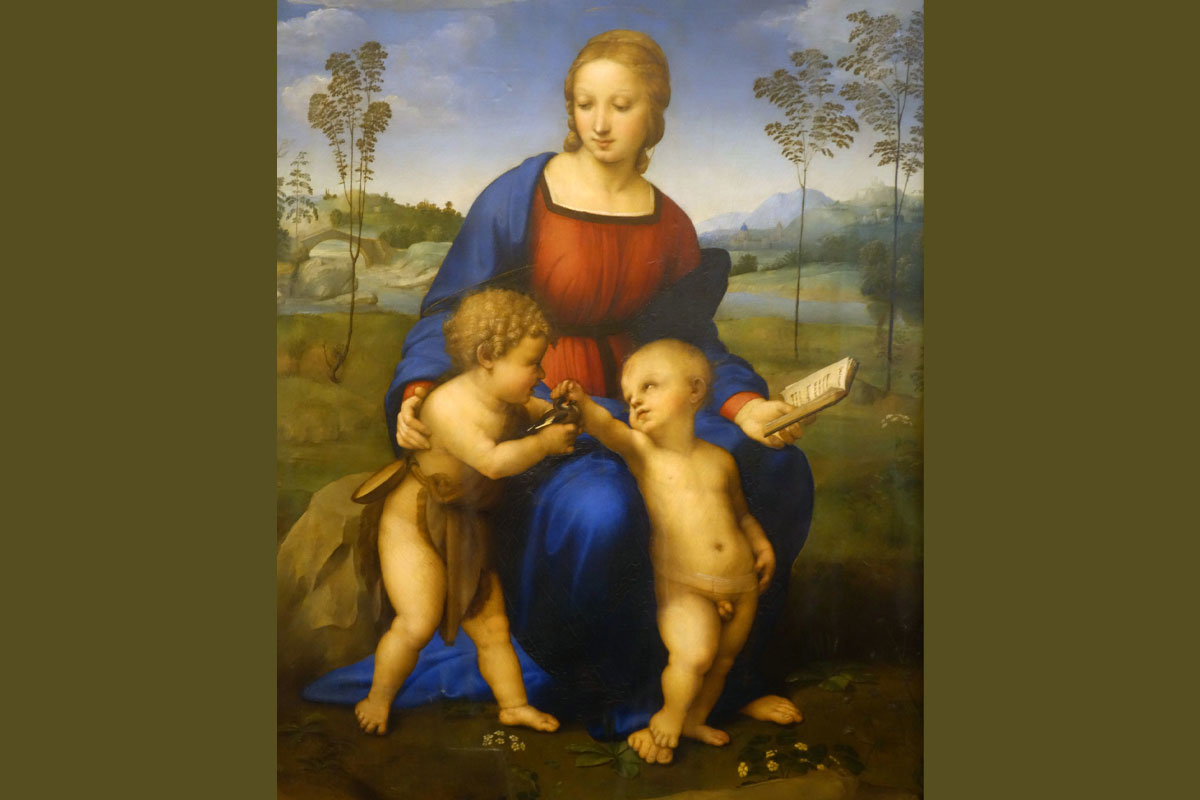
Raphael's Madonna del Cardellino (1506) exemplifies High Renaissance balance and harmony. Recently restored after being shattered into 17 pieces in a 1547 building collapse, the painting shows no visible damage today.
Composition Mastery:
- The perfect pyramid composition with Mary at the apex
- Christ child and young John the Baptist at the base
- The goldfinch (cardellino) in John's hand (Christian symbol—thorns reminded of crown of thorns)
- Sfumato technique borrowed from Leonardo
- Landscape background showing Raphael's Florentine period influence
7. Medusa by Caravaggio (Room 90)
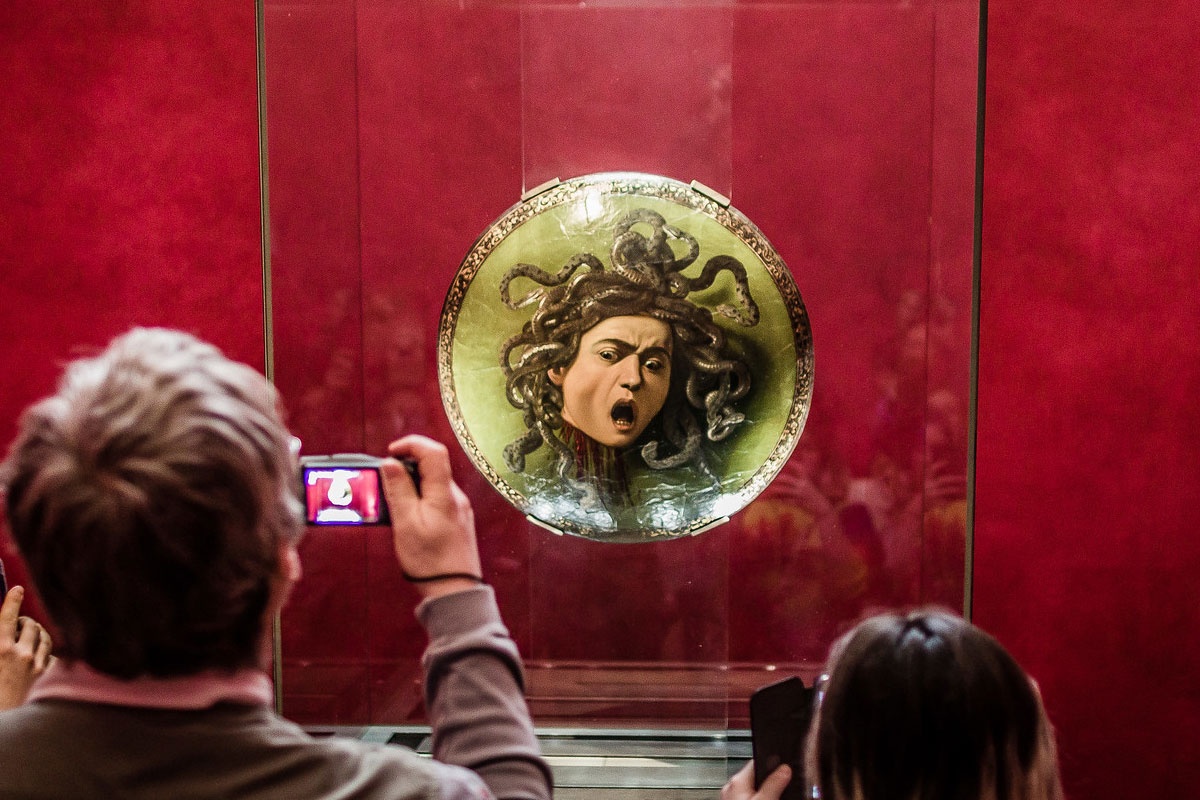
Caravaggio's Medusa (1597), painted on a ceremonial shield, capturing the horrifying moment of decapitation with shocking Baroque realism.
Shocking Realism:
Caravaggio's Medusa (1597) is painted on a circular wooden shield and depicts the exact moment of Medusa's decapitation, her face frozen in horror as she sees her severed head.
Caravaggio's Innovation:
- Painted for Cardinal Francesco Maria Del Monte (to give to Grand Duke of Tuscany)
- Possibly a self-portrait of the artist as Medusa
- Revolutionary use of chiaroscuro (dramatic light and shadow)
- Baroque emotionalism vs Renaissance idealism
- The blood is still dripping—capturing an instant in time
Technical Marvel:
The convex shield format creates an optical effect, making Medusa's head appear to pop out at the viewer.
8. Bacchus by Caravaggio (Room 90)
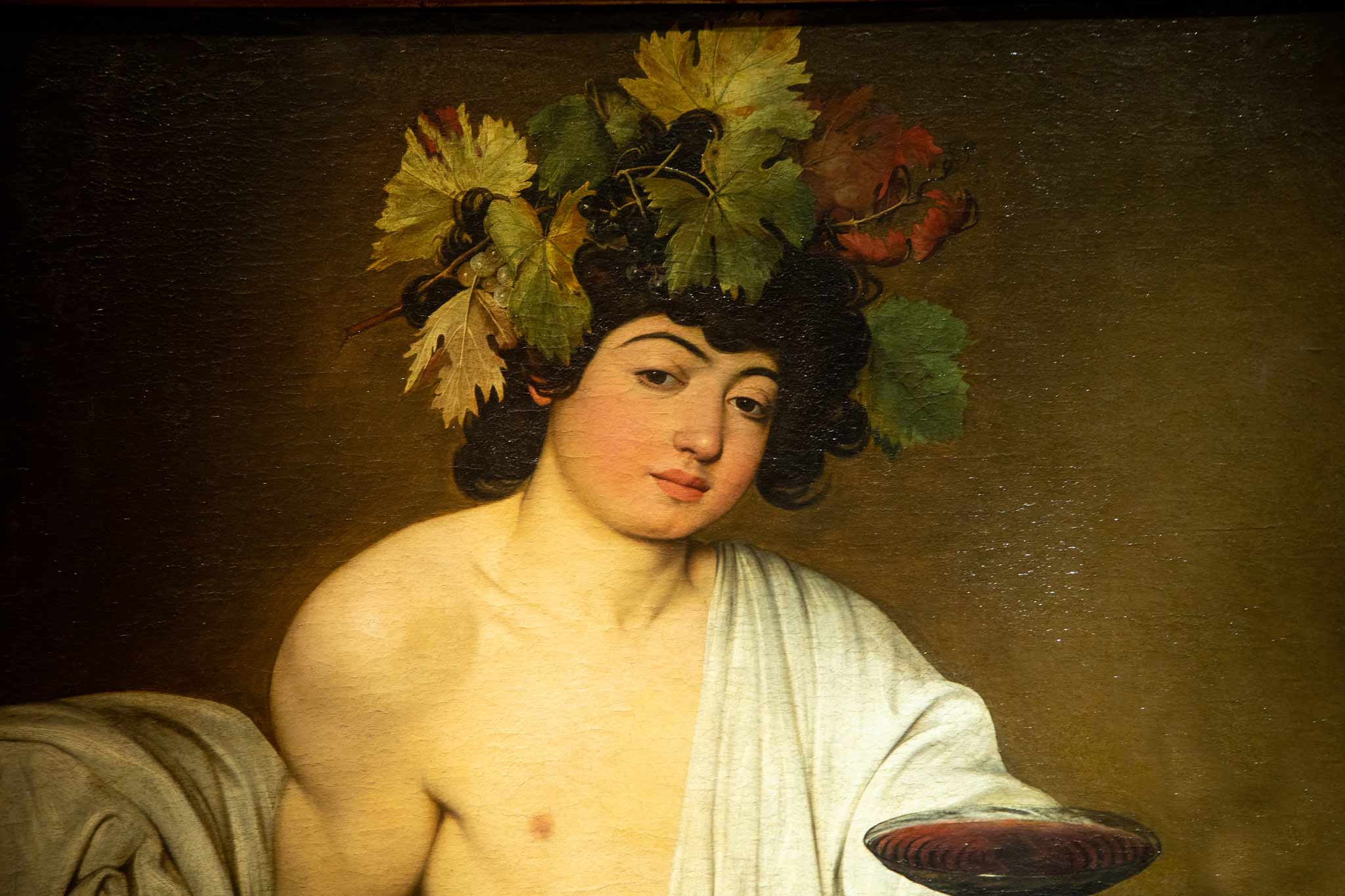
Youthful Decadence:
Caravaggio's Bacchus (1595) shows the Roman god of wine as a contemporary young man, slightly drunk, offering a glass of wine to the viewer.
Hidden Details:
- In the reflection of the wine carafe: a tiny self-portrait of Caravaggio painting
- The fruit is painted with such realism you can see which pieces are rotting
- Bacchus's dirty fingernails—Caravaggio painted models exactly as they were
- The ivy crown identifies him as Bacchus despite the modern clothing
- The pose is borrowed from classical Roman sculpture but updated dramatically
9. Adoration of the Magi by Gentile da Fabriano (Room 5-6)
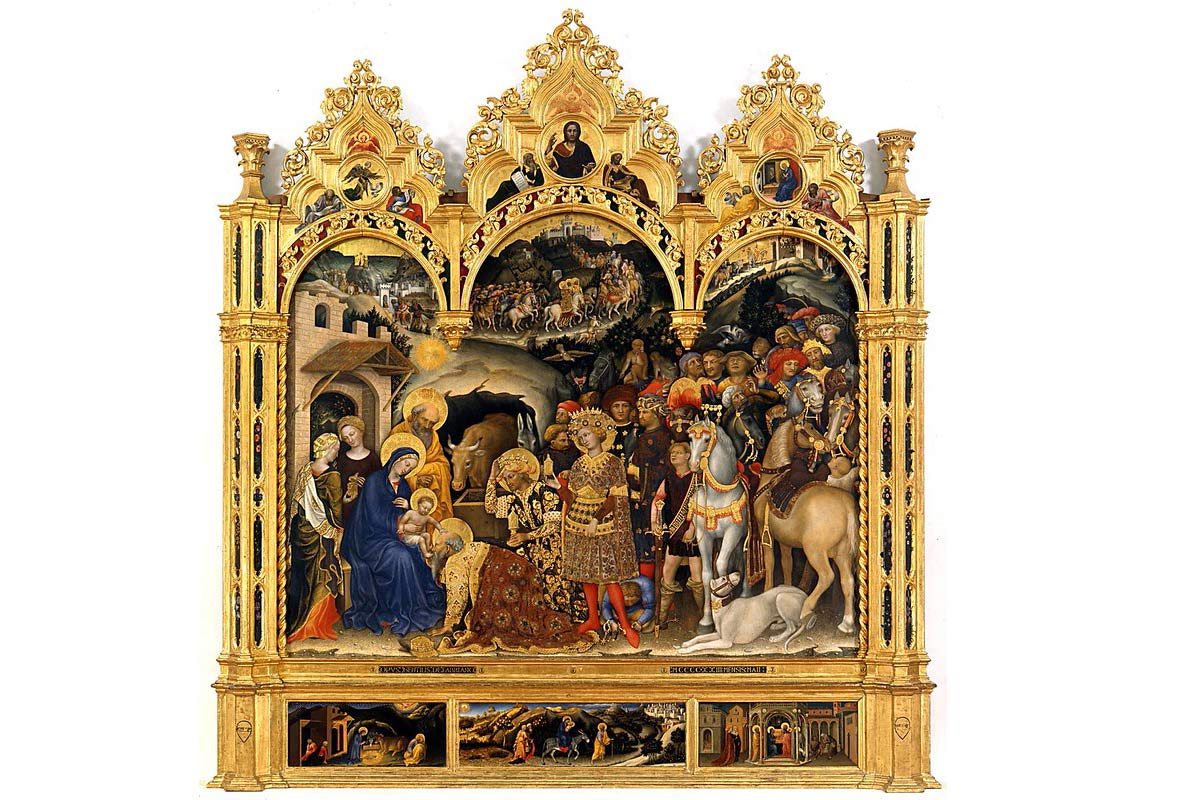
International Gothic Masterpiece:
This 1423 altarpiece represents the International Gothic style at its peak—before the Renaissance revolutionized art. It's one of the most lavishly decorated paintings in the Uffizi.
Golden Splendor:
- Real gold leaf covers much of the surface
- Three predella (small panels) below show scenes from Christ's early life
- The procession winds from background to foreground—a continuous narrative
- Incredibly detailed costumes, animals, and landscape
- Shows art just before Masaccio and Brunelleschi changed everything
10. Duke and Duchess of Urbino by Piero della Francesca (Room 8)
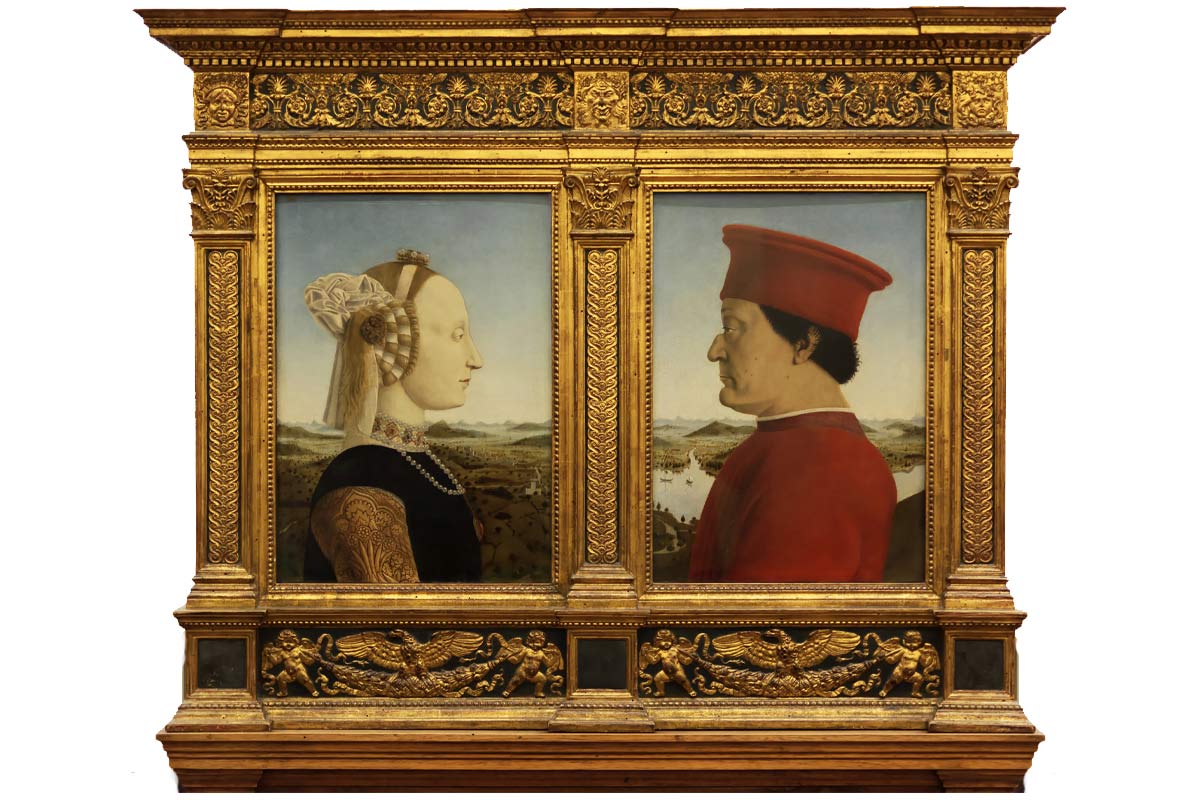
Renaissance Portraiture:
These famous profile portraits (1465-1472) of Duke Federico da Montefeltro and his wife Battista Sforza are among the most recognizable Renaissance portraits.
Why Profile View:
- Duke Federico lost his right eye and part of his nose in a tournament
- Always depicted in left profile to hide his injuries
- The portraits face each other across the room—eternally gazing at one another
- On the reverse: Triumphal processions celebrating their virtues
Symbolic Landscape:
The background shows an idealized landscape of the Duke's territories—both portraits share the same horizon line, symbolizing their unity.
Your Perfect 2-Hour Uffizi Itinerary
Best Time to Visit: Early morning (8:15 AM opening) or late afternoon (after 4 PM) to avoid peak crowds. Since January 2026, entry from 4 PM costs just €16—the ticket office closes at 5:30 PM and the gallery at 6:30 PM, so a 4 PM entry still leaves time for this 2-hour route.
Strategic Route (2 Hours, 10 Masterpieces)
Start: Ground Floor → Elevator to Second Floor
9:00-9:15 AM | Rooms 2-6 (15 min)
- Medieval and early Renaissance
- Stop at Giotto's Ognissanti Madonna (Room 2)
- Gentile da Fabriano's Adoration of the Magi (Room 5-6)
9:15-9:40 AM | Rooms 10-14 (25 min) ⭐ PRIORITY
- Botticelli rooms—the highlight of most visits
- Birth of Venus (take your time—this is iconic)
- Primavera (equally important)
- Other Botticelli works
9:40-9:55 AM | Room 35 (15 min)
- Leonardo da Vinci's Annunciation
- Verrocchio's Baptism of Christ (Leonardo painted the angel)
9:55-10:10 AM | Room 41 (15 min)
- Michelangelo's Doni Tondo
- Only universally accepted panel painting by Michelangelo
10:10-10:25 AM | Room 66 (15 min)
- Raphael's Madonna of the Goldfinch
- Compare Raphael's style to Leonardo and Michelangelo
10:25-10:40 AM | Room 83 (15 min)
- Titian's Venus of Urbino
- Venetian color vs Florentine drawing
10:40-11:00 AM | Room 90 (20 min)
- Caravaggio's Medusa and Bacchus
- Revolutionary Baroque realism
11:00 AM | Exit through gift shop
Time-Saving Tips
Skip-the-Line Strategies:
- Pre-book timed entry tickets (€29 in advance with the booking included, vs €25 on the day—worth it, as the queue at the door can exceed 1-2 hours in high season)
- Book a small group tour with skip-the-line access
- Uffizi + Accademia in one go: our Uffizi & Accademia semi-private tour with an art historian covers both museums in 3.5 hours
- Firenzecard (€85, valid 72 hours from first museum entry) includes entry and booking at the Uffizi and Accademia, plus many other Florence museums
Crowd Avoidance:
- Best days: Tuesday and Wednesday (fewer tour groups)
- Avoid: First Sunday of month (free admission = massive crowds)
- Peak times: 10 AM - 2 PM (cruise ship tours arrive)
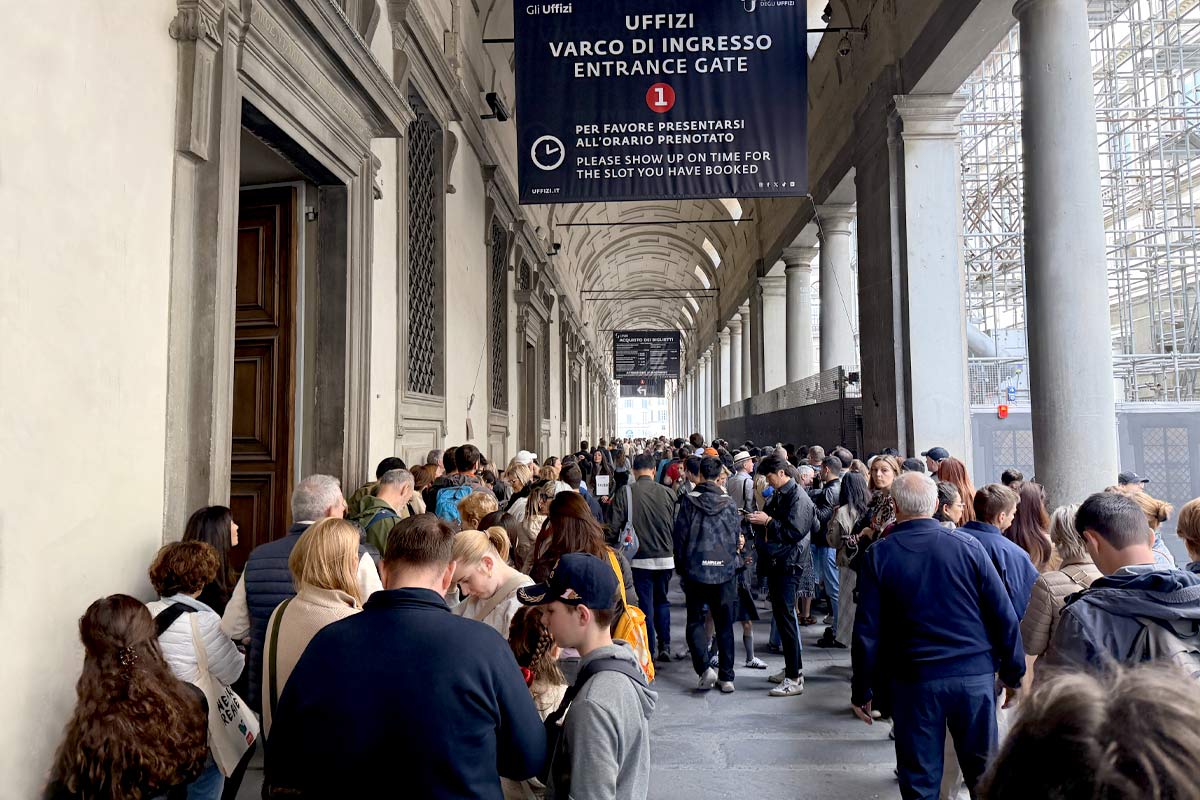
Peak season crowds at the Uffizi Gallery—queues for on-the-day tickets can exceed 1-2 hours in high season, so book ahead.
History of the Uffizi Gallery
From Offices to Museum (1560-1765)
The Medici Vision:
In 1560, Cosimo I de' Medici commissioned Giorgio Vasari to design a building to house the administrative and judicial offices (uffizi) of Florence. The U-shaped structure connected Palazzo Vecchio to Palazzo Pitti via the famous Vasari Corridor, allowing the Medici to walk between their palace and government offices in safety. After a long closure, the Vasari Corridor reopened to visitors in December 2024 (see below).
The Collection Begins:
Francesco I de' Medici began converting the upper floor into a gallery for the family's growing art collection in 1581. The Medici were passionate collectors, and successive generations added masterpieces from across Europe.
Public Museum:
In 1737, the last Medici heiress, Anna Maria Luisa de' Medici, bequeathed the entire collection to the Tuscan state with the provision that it remain in Florence "for the benefit of the public of all nations." The Uffizi officially opened as a public museum in 1765—one of the first modern museums.
The Collection's Evolution
19th Century:
Artworks from churches and convents were added during secularization. The collection reorganized by artistic period rather than by Medici family history.
World War II:
The entire collection was evacuated to prevent Nazi looting—hidden in villas across the Tuscan countryside. Everything returned safely after the war.
1993 Bombing:
A mafia bomb killed five people and damaged the West Wing. Restoration took 8 years. Three paintings were destroyed; many others damaged but restored.
Today:
The Uffizi is undergoing a 20-year expansion project called "New Uffizi" to double exhibition space and improve visitor flow.
What Else to See (If You Have More Time)
Third Floor Highlights (45 min)
Room 66-67: Raphael collection
- Madonna of the Goldfinch
- Portrait of Leo X
- Several Florentine portraits
Room 83: Titian and Venetian School
- Venus of Urbino
- Flora
- Knights of Malta
Room 90: Caravaggio collection
- Medusa
- Bacchus
- Sacrifice of Isaac
The Corridors
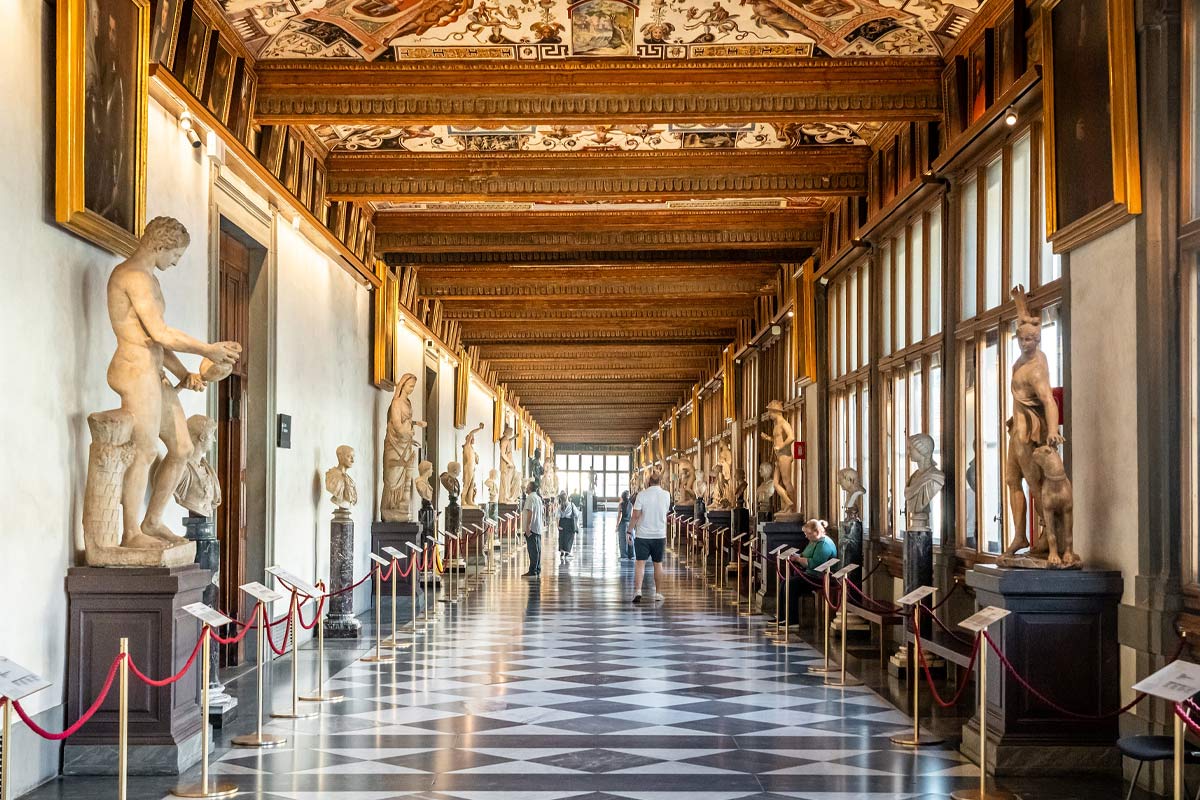
The iconic Uffizi corridors lined with ancient sculptures and Renaissance masterpieces, offering stunning views over Florence.
Don't Rush Through:
- Ancient Roman sculptures line the corridors
- Ceiling frescoes depicting the Medici family and Florence
- Windows overlooking Piazza della Signoria and the Arno River
- The Vasari Corridor: reopened in December 2024 and visited only with the Uffizi + Vasari Corridor ticket (timed slots—book ahead)
Special Collections
Room 18 (Tribune):
Octagonal room designed by Francesco I—the Uffizi's original heart. Features the Medici Venus (ancient sculpture) and family portraits.
Prints and Drawings:
The Cabinet of Drawings and Prints houses 150,000 works (not part of the standard visit; check uffizi.it for current access conditions).
Frequently Asked Questions
How long should I spend at the Uffizi Gallery?
Quick visit: 2 hours covers the top 10 masterpieces
Thorough visit: 3-4 hours for major highlights and some depth
Complete visit: 5-6 hours to see most important works
Art student: Full day to study the collection
Most first-time visitors find 2-3 hours optimal—enough to see major works without museum fatigue.
Is the Uffizi Gallery worth it?
Absolutely. The Uffizi holds the world's finest Renaissance art collection, period. If you visit only one museum in Florence, make it the Uffizi. It's worth visiting even if you're not normally interested in art—the masterpieces are that iconic and culturally significant.
What to see in the Uffizi Gallery if I only have 1 hour?
Focus on Rooms 10-14 (Botticelli), Room 35 (Leonardo), and Room 41 (Michelangelo). This covers the three most famous Florentine Renaissance artists and includes Birth of Venus—the single most iconic work in the collection.
Can I take photos in the Uffizi?
Yes, photography without flash is permitted for personal use. No selfie sticks, no tripods, and no flash photography. Video recording is not allowed.
Is there a dress code for the Uffizi Gallery?
No strict dress code, but shoulders and knees should be covered (same as churches). The museum is air-conditioned, so bring a light jacket in summer.
Are there lockers or bag check?
Free lockers available on the ground floor for backpacks, large bags, and umbrellas. Small bags and purses are allowed in the galleries.
Where's the bathroom?
Restrooms located on the first and second floors. Go before entering the galleries—backtracking wastes time.
Can I buy Uffizi tickets at the door?
Yes—on the day a ticket costs €25 (€16 for entry from 4 PM). But the queue can exceed 1-2 hours in high season (April-October), so pre-booking (€29, booking included) is strongly recommended. Tickets are nominative: the name on the ticket must match your ID.
What's the best Uffizi tour?
Small group tours (max 9 people) with skip-the-line access offer the best experience. Your guide provides context that makes the art come alive while keeping the group small enough to ask questions.
Are audio guides worth it?
Yes, the official audio guide provides excellent context. However, a live guide is better for first-time visitors—they can answer questions and adjust to your interests.
Can I visit the Uffizi and Accademia in one day?
Yes, but it's exhausting. If attempting both: Visit Accademia first (8:15 AM, 1.5 hours), lunch break, then Uffizi (2 PM, 2-3 hours). This requires advance booking for both.
Is the Uffizi wheelchair accessible?
Yes, fully wheelchair accessible with elevators and ramps. Wheelchairs available at the entrance (free, first-come basis).
Practical Information
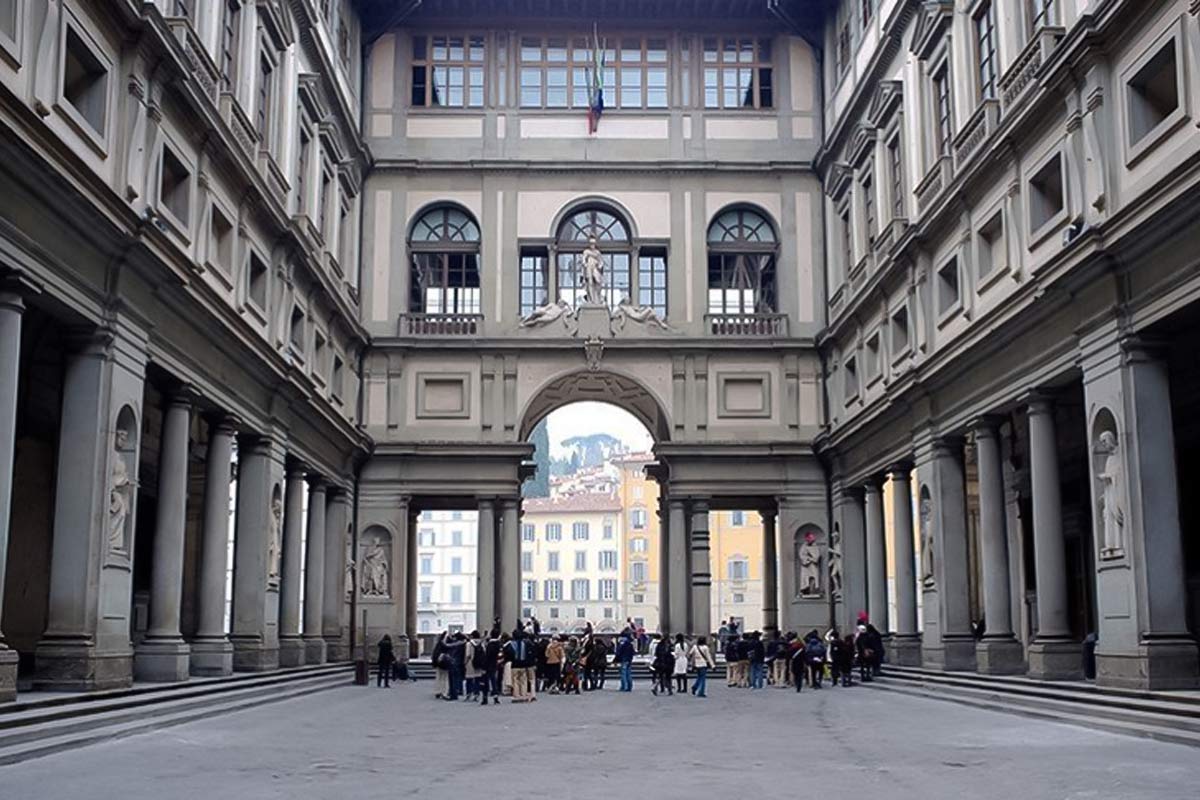
The Uffizi Gallery's Renaissance exterior at Piazza degli Uffizi, designed by Giorgio Vasari in 1560.
Address:
Piazzale degli Uffizi, 6
50122 Florence, Italy
Hours:
- Tuesday-Sunday: 8:15 AM - 6:30 PM (ticket office closes 5:30 PM)
- Closed: Mondays, January 1, December 25
Ticket Prices (2026):
- Full price: €25 on the day at the museum / €29 in advance (booking included)
- From 4 PM: €16 (new since January 1, 2026)
- Reduced: €2 (EU citizens aged 18-25)
- Free: under 18
- Free: First Sunday of every month (no reservations, expect huge crowds)
- Uffizi + Vasari Corridor: €43 on the day / €47 in advance (timed slots, book ahead)
- PassePartout 5 days (Uffizi, Pitti Palace, Boboli Gardens): €40 (€58 with the Vasari Corridor)
- Tickets are nominative: the name must match the visitor's ID

Compare Uffizi Gallery ticket options to find the best choice for your visit.
Skip-the-Line Options:
- Book our Uffizi skip-the-line tour (small group, expert guide)
- Official website: uffizi.it
- Firenzecard (€85/72 hours): includes entry and booking at the Uffizi and Accademia
- Want to walk the Vasari Corridor with a guide? Uffizi tour with the Vasari Corridor
Getting There:
- Walking: 5 minutes from Florence Cathedral
- Bus: Lines C1, C2 to "Galleria Degli Uffizi"
- Parking: Impossible—use park-and-ride outside city center

Uffizi Gallery floor plan highlighting the key rooms and masterpieces for an efficient 2-hour visit.
What to Bring:
- Ticket confirmation (printed or on phone)
- Photo ID (tickets are nominative)
- Water bottle (fill at fountains inside)
- Light jacket (air conditioning)
- Comfortable shoes (lots of standing)
What Not to Bring:
- Large backpacks (must check)
- Umbrellas (must check)
- Food/drinks (not allowed in galleries)
- Tripods or selfie sticks
Uffizi Gallery Tours: DIY vs Guided
Self-Guided Visit
Pros:
- Go at your own pace
- Focus on your interests
- Less expensive
- More flexible timing
Cons:
- No expert context
- Easy to miss important details
- May waste time finding key works
- Harder to understand symbolism
Best For: Art history students, repeat visitors, very budget-conscious travelers
Small Group Guided Tour (Recommended)
Pros:
- Skip-the-line access (no queuing at the door, which can exceed 1-2 hours in high season)
- Expert provides context and stories
- See the highlights efficiently
- Ask questions
- Understand the Renaissance cultural context
Cons:
- Set schedule
- Slightly more expensive
- Must keep up with group
Best For: First-time visitors, art appreciators who want deeper understanding
Our Uffizi Tours
We offer intimate small-group tours (maximum 9 people) with skip-the-line access and expert art historian guides. View our Uffizi Gallery tours
What makes our tours special:
- Maximum 9 people (many group tours are much larger)
- Expert licensed art historians (not just tour guides)
- Focused on the key masterpieces (see the tour page for duration and times)
- Headsets included (hear guide clearly)
- Skip-the-line access guaranteed
- Morning or afternoon departures
Conclusion
The Uffizi Gallery contains the world's greatest collection of Renaissance art, but knowing what to see in the Uffizi Gallery makes all the difference between a frustrating experience and an inspiring one. Focus on the top 10 masterpieces—Botticelli's Birth of Venus and Primavera, Leonardo's Annunciation, Michelangelo's Doni Tondo, Titian's Venus of Urbino, and Caravaggio's dramatic works.
With this guide's strategic 2-hour itinerary, you'll see the absolute highlights without museum fatigue. Pre-book your tickets, visit early morning or late afternoon, and consider a small-group tour for the richest experience.
The Uffizi isn't just a museum—it's where the Renaissance lives. Every painting tells the story of Florence's golden age, when art, science, and humanist philosophy converged to change Western civilization forever.
Ready to experience the Uffizi's masterpieces with an expert guide? Explore our small-group Uffizi tours with skip-the-line access and art historian guides.
Book a guided tour in Florence
We are a licensed Florence tour operator running small-group museum tours with local guides. Browse our tours.
Florence With Locals S.r.l. — Via Taddea 35/R, 50123 Firenze (FI), Italy · P.IVA / VAT IT07564730484 · Registro Imprese di Firenze 07564730484 · REA FI-712305 · SCIA – Agenzia di viaggi e tour operator (ATECO 79.11) — SUAP Comune di Firenze, prot. 07564730484-23072026-0853.
contact@florencewithlocals.com · +39 327 249 1282 · PEC withlocals@pec.it